Download


Review by Stephen Thomas Erlewine
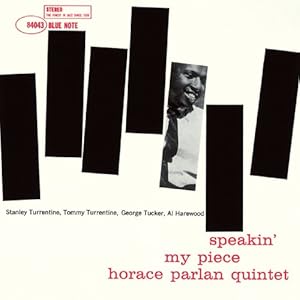
Horace Parlan had a gift for relaxed, swinging hard bop which placed his piano in a central, yet unassuming role. Speakin' My Piece is one of the first albums to find Parlan getting all the ingridients right, from his own subtle playing to soliciting fine contributions of his backing band. Stanley Turrentine, in fact, turns out to be an excellent complement to Parlan, playing in a similarly tasteful style. Five of the six numbers are band originals, and each number is quite similar -- bluesy, gently swinging hard bop. No one pushes too hard on Speakin' My Piece, preferring to create an intimate atmosphere with milder numbers and performances. Such an approach gives each muscian -- Parlan, Turrentine, bassist George Tucker, drummer Al Harewood -- a chance to shine with lyrical, melodic solos and/or sympathetic support, resulting in a charmingly low-key session.
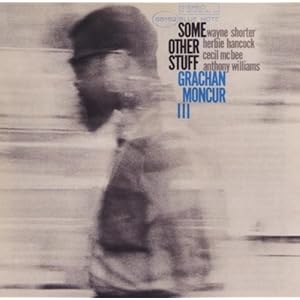
This album feels like traveling through a nebula. Every piece is very subtle and is composed to provide freedom to the great musicians involved. It's a pity that all of the avant-garde is so frequently swept together under that one label; this is not stream of consciousness free-blowing but very tentative probing compositional playing that constantly flirts with atonality, but uses it to great artistic effect. Everyone involved is a great and highly skilled player; Grachan's sidemen are Wayne Shorter, Herbe Hancock, Cecil McBee and Tony Williams, or, in other words, three fifths of Miles Davis' next quintet, and one of the most explorative bassists out there. For those who think of freer music as a place for unrefined players who scream without nuance, this album would be a great rebuttal.
This was one of Hutcherson's few truly challenging dates as leader, an amalgam of mid-60's post bop sensibilities and mind-blowing "New Thing" esoterics. It is perhaps his most consistently engaging, focusing the experiments on "Dialogue" into a vision more wholly personal--all the while retaining the sense of exploratory exhiliration that made that earlier session so great. Hutcherson is--fittingly--a far more prominent voice here, composing half the album and taking greater liberties with his solo space. Joe Chambers, whose thoughtful accompaniment and propulsive drive provided the backdrop for numerous "salad-era" Blue Note sessions, penned the other half; his decisively "free" compositions, much like his drumming, furnish the foundations for some truly intricate, engaging group communication. The improvisation itself is more compact, the tracks shorter, the scope more synoptic--a sort of manifesto for the vibist's future and past, cut clean down the middle and made ready for consumption.
Suffice it to say, the group is killer and delivers the goods. The rhythm work is rock solid, the front line of Spaulding and Hubbard as fiery and captivating as it was or would be anywhere else. Each might go on to bigger and better things, but nowhere did these musicians better fit Bobby's world, sound so sympathetic, emphatic, enthused.
This is Hutcherson's DEFINITIVE Blue Note session, a watermark for the label... and I'll bet that few can say otherwise. - Leone Evangelista

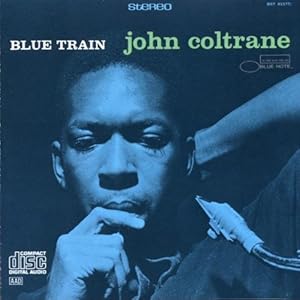
The tenor sax giant had signed with another label when he embarked on this one-off date for Blue Note, an excursion that paid off with an enduring modern jazz masterpiece. Boasting volley after volley of smart soloing and intuitively swinging rhythm work, Blue Train is a joy, from the coolly precise ensemble entry on the opening title piece through the set's balance of elegant hard bop conversations and smooth downshifts into ballads. John Coltrane wrote four originals for the date, all of them now regarded as standards, and assembled a rhythm section including pianist Kenny Drew, Miles Davis's rhythm section of bassist Paul Chambers and drummer Philly Joe Jones, and trumpeter Lee Morgan and trombonist Curtis Fuller, both recent Blue Note recruits. Coltrane's signature sound, now fully developed but still hewing more to familiar blues and chromatic harmonies than his later modalities, is confident and expansive, and his partners respond vividly throughout. --Sam Sutherland
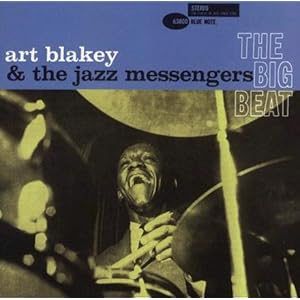
Perhaps the best known and most loved of Art Blakey's works, The Big Beat is a testament to the creative progress of one of the best jazz drummers of all time. Now over 40 years old, The Big Beat is as thunderous as ever. Here, Blakey combines his rhythm with tenor saxophonist Wayne Shorter's brilliant composing to make what could only be termed a "structurally raw" album. Each track rips through bebop as quickly as Blakey ripped through drum heads. "Dat Dere" and "Lester Left Town" stand out as part of the true canons for hot jazz. Two alternate versions of "It's Only a Paper Moon" round out the album, both brimming with the fluid integrity of the song and the drive only Blakey could provide. As one of the few drummers to step out and lead, not just play backup, Blakey created a true jazz treasure in The Big Beat.
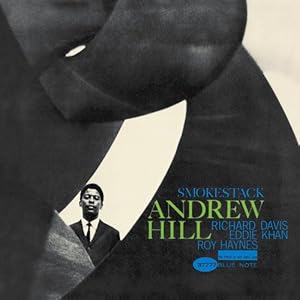
Trimming away some of the overt Afro-Cuban rhythms that distinguished Black Fire, Andrew Hill turned in a dense, cerebral set of adventurous post-bop on his second Blue Note session, Smoke Stack. Comprised entirely of original Hill compositions, Smoke Stack is in the middle ground between hard bop and free jazz -- it isn't as loose and dissonant as free, but with its long, winding modal improvisations and hazy song structures, it's a lot less accessible than bop. It also isn't as successful as Black Fire, which worked similar territory with edgier results. Part of the problem is that Hill simply meanders throughout most of Smoke Stack, wandering off into quietly discordant sections that turn in on themselves. It's subdued music that requires concentration, but doesn't necessarily reward such effort. Even with its faults, Smoke Stack is far from an unworthy record -- Hill's insular, intellectual style may be occasionally frustrating, but his playing is frequently provocative and challenging, and his backing group of Richard Davis (bass), Eddie Khan (bass), and Roy Haynes (drums) offer sympathetic support. However, it's an album that promises more than it delivers.
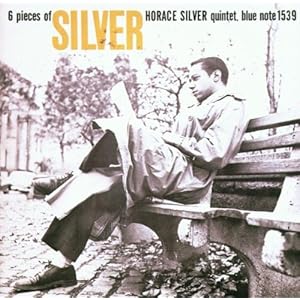
This 1956 recording by the Silver Quintet, featuring Hank Mobley on tenor sax and Donald Byrd on trumpet, is pure hard-bop heaven created by some of the masters of the genre. After spending the previous two years playing piano on some of Miles Davis' classic Prestige and Blue Note albums, and touring with the Art Blakey Quintet and the first edition of his Jazz Messengers, Silver was more than ready to step forward as a leader. His compositional talents had already been showcased with Blakey's groups, especially on 1954's "Horace Silver and the Jazz Messengers" (Blue Note), but "Six Pieces of Silver" was his his first chance to record with his own working quintet.All six Silver originals are gems, including classics like "Senor Blues" and "Cool Eyes," and the ensemble playing throughout is outstanding, especially given the group's youthfulness—Silver is the elder statesman at twenty-eight; drummer Louis Hayes the youngest at nineteen. Silver's writing at this early point in his career is more solidly in the bebop camp than his later funk and soul efforts, but the blues, gospel, and Caribbean influences that are his trademarks are evident. His own playing is marvelously subtle, showing a clear debt to Powell and Monk, especially on slower numbers like "Enchantment" and the trio efforts "Shirl" and "For Heaven's Sake." Mobley's big, warm tenor is a particularly good fit with Silver's piano, and the young Donald Byrd shines on upbeat numbers like "Virgo." The rhythm section of Doug Watkins on bass and Hayes on drums provides excellent support throughout the session. The CD reissue, part of Blue Note's Connoisseur series, also includes the popular vocal version of "Senor Blues" by Bill Henderson.
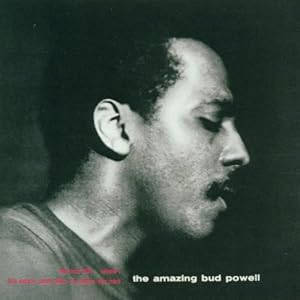
The CD reissues of the two albums titled The Amazing Bud Powell put the important recordings in chronological order (which they weren't in the LP versions) and add some alternate takes; all of the music has also been included in a definitive four-CD box set. Although the latter is the best way to acquire the important performances, this CD gives one a strong sampling of pianist Bud Powell at his best. Powell is heard in a classic session with trumpeter Fats Navarro and tenor saxophonist Sonny Rollins (which is highlighted by exciting versions of "Dance of the Infidels," "52nd Street Theme," and "Bouncing With Bud") and in a trio performing "Over the Rainbow" and three versions of his intense "Un Poco Loco."
Freddie Hubbard's first recording as a leader, Open Sesame features the 22-year-old trumpeter in a quintet with tenor saxophonist Tina Brooks, the up-and-coming pianist McCoy Tyner, bassist Sam Jones and drummer Clifford Jarvis. This set shows that even at this early stage, Hubbard had the potential to be one of the greats. On the ballad "But Beautiful" he shows maturity; other highlights include "Open Sesame," a driving "All or Nothing at All" and "One Mint Julep." It's an impressive start to what would be a very interesting career.
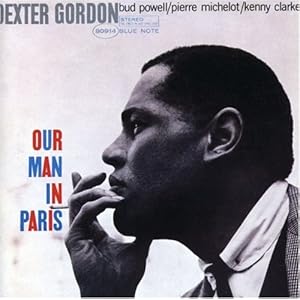
This session is a meeting between three of the most influential musicians of the forties (Dexter, Bud Powell and Kenny Clarke as "Americans in Paris"), completed by the great french bassist Pierre Michelot. At this really happy date the musicians decided to play tunes, that go back to the time, when those guys first gigged and recorded together, like Parker's "Scrapple from the Apple". But especially about Dexter's playing it can be said, that he had modified his style during the sixties, absorbing ideas from musicians, who originally had been influenced by him (listen to some very Coltrane-ish licks on "Night in Tunisia"). Actually, Dexter once stated, that he was thrilled by that kind of mutual exchange of ideas: First he had been a main source of influence for the early John Coltrane and later, especially during the time of this recordings (1963), Dexter further developed his style using some of Coltrane's ideas. Besides the above mentioned faster tunes, I expecially like "Willow Weep for Me" with it's nice intro and that kind of blues-feeling and of course the beautiful ballad "Stairway to the Stars". Bud Powell, almost at the end of his career, still plays very inspired. Expecially during those years in Paris, Bud was at his best on encounters with other great Americans, who visited Europe or temporarly lived there. 

What an alliance: a legendary bandleader and composer, a pioneering bop drummer, and an unclassifiable (and often prickly) bass behemoth. It's no wonder that the tension between Duke Ellington, Max Roach, and Charlie Mingus is thick and extremely tangible, permeating this breathtaking 1962 album with passion and aggression. On the jagged blues "Very Special," Ellington establishes a weighty mood while his piano work almost borders on free jazz. Roach's sticks dance and prance across every inch of his kit on "A Little Max"; on "Caravan" he effectively shifts from exotic rhythms to straight time. Duke's harmonic invention is delicate and mysterious on "Fleurette Africaine," but simultaneously jarring and cerebral on the confrontational "Wig Wise." It's hard to believe only three people are creating the stomping, disjointed monster that is the title track. Ellington alone emphasizes the beautiful melodies of the classic ballads "Soltitude" and "Warm Valley," but the edge returns when the rhythm section joins him. Mingus, who actually idolized Ellington, seems to be purposely agitating the master, almost taunting him. You'd say the synergy was magical, except that they seem to be working against each other. --Marc Greilsamer
After a handful of solid albums as a leader for the Riverside label (see my reviews), and after recording for Blue Note as a member of the Horace Silver Quintet for more than four years, trumpeter Blue Mitchell was given the opportunity to cut a Blue Note album as a leader by Alfred Lion in 1963. However, his debut session, now known as "Step Lightly," did not see the light of day at the time of its recording. Blue was given another chance on July 30, 1964 and the result was the magical "The Thing To Do" (see my review). Blue Mitchell's third Blue Note session, "Down With It," was recorded on July 14, 1965. It features two of his colleagues from the old Horace Silver band, Junior Cook on tenor sax and Gene Taylor on bass. Joining the three Silver alumni are Al Foster on drums and the pianist Chick Corea, who made his recording debut on Blue's "The Thing To Do." Since Blue Mitchell was a Blue Note trumpeter at the height of Lee Morgan's popularity, it is no surprise that "Down With It" features several soulful, Sidewinder-like jazz numbers. But don't assume this is one of Blue's cheesy forays into funk from the later 60s. "Down With It" is a great modern jazz album, and very comparable to Lee Morgan titles like "Charisma" and "Cornbread." For those of you that did not get "Down" in the "Rare Groove" series, thankfully you can pick up this new RVG reissue. 
This adventurous yet lyrical trio LP was Chick Corea's career breakthrough album, establishing him as a significant pianist and composer. Over three days in March 1968, Corea recorded with Miroslav Vitous and Haynes (they have since reunited many times over past 34 years) and produced a total of 13 great performances only five of which were used on the original albums. The material ranged from soon-to-be Corea classics like "Matrix" and "Windows" to extended improvised pieces like the title tune to creative interpretations of Monk's "Pannonica" and "My One And Only Love".
In recent reviews of trumpeter Freddie Hubbard Blue Note reissues "Night of the Cookers" and "Breaking Point", I said that it was great to have those titles available again but that I would prefer it if the rarer "Blue Spirits" had been released. Well the folks at Blue Note must have been reading my Amazon comments because "Blue Spirits" has been included in the latest batch RVG reissues (8/10/04). This title had been previously available on CD, but aside from a brief reprint in the old Collectors Choice program, it has been out-of-print for nearly 15 years! Well I must say it is great to finally capture the elusive "Blue Spirits." This disc is actually made up of three different recording sessions. The first two tracks, "Soul Serge" and "Cunga Black," are from February 19, 1965 and feature James Spaulding on alto sax and flute, Joe Henderson on tenor sax, Kiane Zawadi on euphonium, Harold Mabern Jr. on piano, Larry Ridley on bass, Clifford Jarvis on drums and Big Black on conga. This material is latin-flavored, soul jazz and very similar in style to the music on "Night of the Cookers." Many will find these songs enjoyable but for me they are the album's most predictable selections and therefore the weakest. Next are three cuts from a week later (2/26/65) again featuring Hub, Spaulding and Zawadi, but this time joined by Hank Mobley on tenor sax, McCoy Tyner on piano, Bob Cranshaw on bass, and Pete LaRoca on drums. This is classic modern modal jazz and all three songs, "Outer Forces," "Blue Spirits" and "Jodo" (reprised on "Cookers" but tighter here), are among the best Blue Note songs of the period. However, the most surprising material comes from the final session of March 5, 1966 with Hub, Henderson, Hosea Taylor on bassoon, Herbie Hancock on piano and celeste, Reggie Workman on bass, and Elvin Jones on drums. These two tracks, "The Melting Pot" and "True Colors," were not included on the original vinyl and are bonus tracks to this CD (and the previous incarnation). While Hubbard penned all seven of this CD's compositions, these two are a noticeable departure from his previous writing. Sure, they are experimental but fascinating in revealing Freddie's numerous creative talents, and the direction his music could have taken had he continued down this avant-garde path. In all, "Blue Spirits" is one of those rare Blue Note gems that I have enjoyed for years, and now with this reissue you can too. Amazon user.Review by Stacia Proefrock
Fulfilling the potential promised on his Blue Note debut, Night Dreamer, Wayne Shorter's Ju Ju was the first really great showcase for both his performance and compositional gifts. Early in his career as a leader Shorter was criticized as a mere acolyte of John Coltrane, and his use of Coltrane's rhythm section on his first two Blue Note albums only bolstered that criticism. The truth is, though, that Elvin Jones, Reggie Workman, and McCoy Tyner were the perfect musicians to back Shorter. Jones' playing at the time was almost otherworldly. He seemed to channel the music through him when improvising and emit the perfect structure to hold it together. Workman too seemed to almost instinctively understand how to embellish Shorter's compositions. McCoy Tyner's role as one of the greatest jazz pianists of all time was played here as well, and his light touch and beautiful, joyful improvisations would make him a much better match for Shorter than Herbie Hancock would later prove to be.
JuJu rests in the uphill portion of Shorter's creative peak. While the sidemen may have been an even better match for him than the ensembles he would put together for later albums, he was just beginning to find his footing as a leader. His performances were already showing evidence of great originality -- yes, they were influenced by Coltrane, but only in the way that they broke apart the structures of the bop sound to create a sound that had all of the variety and flexibility of the human voice. On later albums like Speak No Evil and The Soothsayer, however, Shorter would rise to an even higher level as a performer with more powerful, confident playing that reached farther afield in its exploration of melodic textures.
What really shines on JuJu is the songwriting. From the African-influenced title track (with its short, hypnotic, repetitive phrases) to the mesmerizing interplay between Tyner and Shorter on "Mahjong," the album (which is all originals) blooms with ideas, pulling in a world of influences and releasing them again as a series of stunning, complete visions.