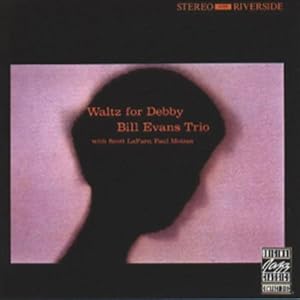
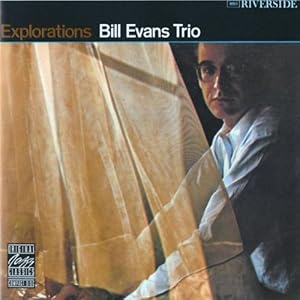
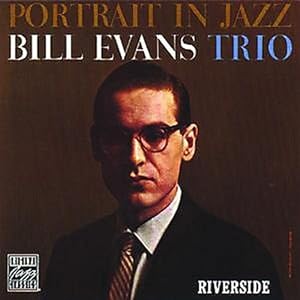
At the turn of the decade, Evans led a trio with bassist Scott LaFaro and drummer Paul Motian. This group was to become one of the most acclaimed piano trios — and jazz bands in general — of all time. With this group, Evans's focus settled on traditional jazz standards and original compositions, with an added emphasis on interplay among the band members that often bordered on collective improvisation, blurring the line between soloist and accompanist. The collaboration between Evans and the young LaFaro was particularly fruitful, as the two achieved a remarkable level of musical empathy. The trio recorded four albums: Portrait in Jazz (1959); and Explorations, Sunday at the Village Vanguard, and Waltz for Debby, all recorded in 1961. The last two albums are live recordings from the same recording date, and are routinely named among the greatest jazz recordings of all time. In 2005, the full sets were collected on the three-CD set The Complete Village Vanguard Recordings, 1961. There is also a lesser-known recording of this trio, Live at Birdland, taken from radio broadcasts in early 1960, though the sound quality is poor.
In addition to introducing a new freedom of interplay within the piano trio, Evans began (in performances such as "My Foolish Heart" from the Vanguard sessions) to explore extremely slow ballad tempos and quiet volume levels, which had been virtually unknown in jazz. His chordal voicings became more impressionistic, reminiscent of classical composers such as Debussy, Ravel, Scriabin, and Satie, and he moved away from the thick block chords he had often used with Davis. His sparse left-hand voicings supported his lyrical right-hand lines, reflecting the influence of jazz pianist Bud Powell.
Like Davis, Evans was a pioneer of modal jazz, favoring harmonies that helped avoid some of the idioms of bebop and other earlier jazz. In tunes like Time Remembered, the chord changes more or less absorbed the derivative styles of bebop and instead relied on unexpected shifts in color. It was still possible (and desirable) to make these changes swing, and a certain spontaneity appeared in expert solos that were played over the new sound. Most composers refer to the style of Time Remembered as "plateau modal," because of its frequent juxtaposition of harmony.