Monday, October 31, 2011

Magnus Öström - Thread Of Life

Thread Of Life is drummer Magnus Öström's debut as leader, after 15 years with the Esbjörn Svensson Trio. e.s.t. was one of the most successful jazz ensembles ever to emerge from Europe, gaining not only critical acclaim but also commercial success. It's a hard act for Öström to follow, and it's to his immense credit that, after a sabbatical from the scene to reflect on his plans after Svensson's tragic death in 2008, Öström has gathered a talented new band around him and created a work of great beauty and humanity.

The tune that is likely to garner the greatest interest is "Ballad For E," Öström's tribute to Svensson, on which he is joined by e.s.t. bassist Dan Berglund and occasional e.s.t. guest musician, guitarist Pat Metheny. It's an exquisite tune, played superbly by the trio. Metheny arranged the song and his acoustic guitar playing, with its hint of Americana, is some of the loveliest he has ever recorded.

While "Ballad For E" is undoubtedly a triumph, Thread Of Life contains other tunes that are equally affecting and just as lovely. "Hymn [For The Past] Part II" is an extended ballad, with a soulful and reflective mood reminiscent of some of Krzysztof Komeda's work. The most lushly melancholic tune here is "Longing," a flowing ballad that combines Gustaf Karlöf's piano and Andreas Hourdakis' electric guitar with Öström's smooth drum patterns to create a mood that is accurately reflected in the title.

There's a more upbeat feel to the album too, most obviously in "Piano Break Song;" driven by Öström's fluid drumming; and the insistent hand-clap and wailing, wordless, vocal of "Afilia Mi." Despite its title, "The Haunted Thoughts and the Endless Fall" is another of the more up-tempo tunes, although this time the staccato keyboard rhythm builds tension under Hourdakis' snaking prog-rock guitar.

Öström has described "Longing" as having sadness, but also hope. It's a fitting description of Thread Of Life as a whole. The album is clearly influenced by Öström's recent loss—its stark, monochrome, cover design emphasizes this aspect—but it also shows how he is now looking to the future: with hope and optimism. The beauty of Thread Of Life arises from its ability to capture these emotions with grace.

Track Listing: Prelude; Piano Break Song; Longing; Afilia Mi; Weight of Death; Ballad For E; The Haunted Thoughts and the Endless Fall; Between; Hymn [For The Past] Part 1; Hymn [For The Past] Part II.

Personnel: Magnus Öström: Drums, percussion, electronics, keyboards, vocals; Andreas Hourdakis: electric and acoustic guitar; Gustaf Karlöf: grand piano, keyboards, vocoder; Thobias Gabrielson: electric bass, bass synthesizer, keyboards, trumpet; Pat Metheny: acoustic guitar (6); Dan Berglund: double bass (6).


Download

Sunday, October 30, 2011

Tigran Hamasyan - A Fable (2011)

The young, Armenian-born pianist Tigran Hamasyan possesses an almost intimidating virtuosity, a style that owes as much to Art Tatum's two-handed volubility and the sweeping refinement of Impressionist composers as it does to the spiraling, East-meets-West melodies of his homeland. Winner of the 2006 Thelonious Monk Institute's piano competition, New Era (2008, Nocturne) found Hamasyan settling into a familiar, if impressive trio aesthetic, mining the angular vernacular of modern jazz piano on now-standard vehicles like "Well, You Needn't" or "Solar," as well as on some of his own lovely compositions. So it is a welcome surprise to hear the dreamlike, tinkling sustain of the minute-long "Rain Shadow" that opens this new disc almost like a lullaby, an otherworldly state that A Fable, by and large, maintains across its length. For Hamasyan's first solo album, gone are the walking bass, the stabs at jazz-based legitimacy, or any outright forays into the typical jazz canon. Instead, he produces his first fully mature work, in an individual style utterly unlike anything else on the market.

Folklore certainly seems to be on the pianist's mind. Both the titles of tunes ("A Fable," "Kakavik (The Little Partridge)," or "The Legend of the Moon") and the way many of the tracks build themselves around simple, almost childlike melodies attest to this return to roots. "Longing" is perhaps the finest example of this on the album: the melody, sentimental but not cloying, is rendered in a haunting pianissimo with minimal improvisation, as the pianist recites two quatrains about exile and homecoming from the Armenian poet Hovhannes Tumanyan in a beautifully unadorned singing voice. These fragile, touching moments are plentiful on A Fable, "The Legend of the Moon" or "Mother, Where Are You?" introducing a rich body of balladic work that eschews technical fireworks in favor of powerful emotional connection.

The pianist is still capable of raising the tempo when needed, however, which gives the set a much needed sense of variety. With equally evocative melodies, both "What the Waves Brought" and "Samsara" launch into dense, fleet-fingered territory, ricocheting from one arpeggiated cluster to the next with centrifugal force. A touch of Liszt's Rhapsodies, Debussy's Arabesques or even Jacques Ibert's "Little White Donkey" collide with the modal melodic sense of his Armenian heritage, and are then allowed to evolve freely through his improviser's sensibility. In the faster sections, the precision of Hamasyan's touch, his volume control and the independence of his hands are absolutely breathtaking. How impressive, that even during these showpieces for his technique, he still manages to tether himself to an unimpeachable emotional core.

"Someday My Prince Will Come" is the album's sole nod to jazz music proper, but even it is filtered through the prism of what is obviously an increasingly confident, individual voice. If A Fable is Hamsyan's method of coming home, we are lucky that he invites us along for the ride. His world is a stirring place to spend an hour.

Track Listing: Rain Shadow; What The Waves Brought; The Spinners; Illusion; Samsara; Longing; Carnaval; The Legend of the Moon; Someday My Prince Will Come; Kakavik (The Little Partridge); A Memory That Became A Dream; A Fable; Mother, Where Are You?

Personnel: Tigran Hamasyan: piano, voice.

Friday, October 28, 2011

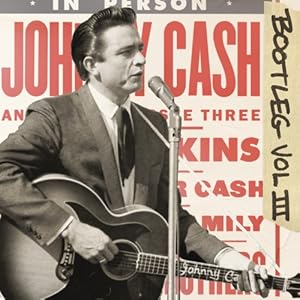
Johnny Cash - Bootleg vol. 3: Live Around the World


Volume 1 of the bootleg series, Personal File, documented solo home recordings from the `70s and `80s in which Johnny Cash explored a wide variety of American song. Volume 2, From Memphis to Hollywood, essayed the background of Cash's transition to country stardom via a collection of 1950s radio appearances, Sun-era demos and a deep cache of 1960s studio recordings. Volume 3 looks at Cash's role as a live performer from 1956 through 1979, including stops at the Big "D" Jamboree, the Newport Folk Festival, a USO tour of Vietnam, the White House and the Wheeling Jamboree. Among these fifty tracks, thirty-nine are previously unreleased, giving ardent Cash collectors a wealth of new material to enjoy.

The earliest tracks, from a 1956 show in Dallas, find Cash opening with a powerful version of the 1955 B-side "So Doggone Lonesome" and introducing his then-current single on Sun, "I Walk the Line." At the end of the three-song Dallas set you hear an audience member call out for "Get Rhythm" and the band launches into it. Cash was always a generous stage performer, early on sharing the limelight with Luther Perkins and Marshall Grant, introducing and praising them, and giving Perkins a solo spot for the instrumental "Perkins Boogie." By 1962 the Tennessee Two had expanded to a tight trio with the addition of W.S. Holland on drums, but even with Cash's move to Columbia, the group's appearance at a Maryland hoe-down is still rootsy and raw. They rush "I Walk the Line" as if they'd had one too many pep pills, but Cash is charming as he addresses the audience and hams it up with impressions and jokes.

Two years later at the Newport Folk Festival Cash was introduced by proto-folkie Pete Seeger. Cash is thoroughly commanding as he sings his hits and expands his palette with Dylan's "Don't Think Twice It's Alright," Pete LaFarge's "Ballad of Ira Hayes" and the Carter Family's "Keep on the Sunny Side." His 1969 trip to Vietnam was bookended by more famous live recordings at Folsom and San Quentin prisons, but the soldiers at the Annex 14 NCO Club in Long Binh were treated to a prime performance that included June Carter on "Jackson," "Long-Legged Guitar Pickin' Man" and "Daddy Sang Bass." Cash continued to mix his hits (including a request for "Little Flat Top Box") with folk and country classics, mixing "Remember the Alamo" and "Cocaine Blues" into his set.

Cash's performance at the Nixon Whitehouse in 1970, is this set's most legendary and also its longest, at twelve songs. Richard Nixon provides the introduction, including a few remarks on the safe return of Apollo 13. Cash's set includes a then-familiar mix of hits and gospel songs, but is mostly remembered for his choice not to play Nixon's requests for "Okie From Muskogee" and "Welfare Cadillac," and instead sing "What is Truth," "Man in Black" and "The Ballad of Ira Hayes," the first of which is included here. Nixon is self deprecating in explaining Cash's rebuff, and Cash is deferential in addressing Nixon as "Mr. President," leaving the political implications to seem more legend than truth. Still, Nixon couldn't have been comfortable having his antipathy towards the younger generation questioned by "What is Truth."

The remaining tracks collect an eclectic array of songs recorded at a number of different locations throughout the 1970s. The titles include Kris Kristofferson's "Sunday Morning Coming Down," the 1920s standard "The Prisoner's Song," Gene Autry's "That Silver Haired Daddy of Mine," Steve Goodman's "City of New Orleans," the Western classic "Riders in the Sky," Billy Joe Shaver's "I'm Just an Old Chunk of Coal," and several of Cash's Sun-era tunes. It's interesting to hear Cash's breadth, though not as fulfilling as the set lists elsewhere in the collection. The recording quality is good to excellent throughout, with the Newport tracks in especially crisp stereo. If you're new to Cash's catalog, start your appreciation of his performing talents with At San Quentin, but this is a terrific expansion (at nearly 2-1/2 hours) of the well-known, previously issued live materials. [©2011 hyperbolium dot com]


Thursday, October 27, 2011

Fire! with Jim O'Rourke - Unreleased

On their second album this excellent Swedish supergroup teams up with none other than the legendary Jim O´Rourke for a stunning slice of hypnotic jazz psychedelia and sonic mayhem of the subtle sort. Recorded in Tokyo last September, ”Unreleased?” boasts four tracks, three of them between 9 and 18 minutes long, giving ample time for those evolving, warm grooves to settle or work their way towards epic conclusions.

Mats Gustafsson (The Thing) – saxophone,  Fender Rhodes, electronics
Johan Berthling (Tape) – electric bass
Andreas Werliin (Wildbirds & Peacedrums) – drums
Jim O´Rourke (Gastr del Sol, Sonic Youth) – electric guitar, synthesizer

Wednesday, October 26, 2011

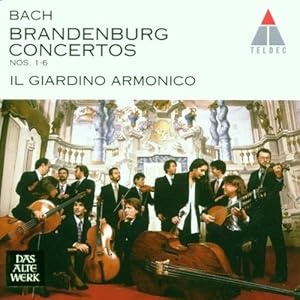
Bach :Il Giardino Armonico - Brandenburg Concertos 1-6

I'm a professional singer who specializes in Baroque and early repertoire. This has made me a firm believer in the historical performance movement. It has done so much to give new shape and dynamism to works that were heretofore rendered mostly in broad, lugubrious strokes. The movement continues to evolve, and as it does the amount of color and depth infusing this repertoire continues to grow and take on new dimension. No longer are many of us content to hear Monteverdi and Lully sung with the extremely bright, straight tones of Emma Kirkby and Nancy Argenta, but rather wish to hear the more appropriate lush and shimmery vocal colors of singers like Sandrine Piau, Guillemette Laurens, Christine Brandeis and Lorraine Hunt Lieberson.

With that in mind, I've heard more recordings of the Brandenburgs than I care to name. And I'm just as tired of the anemic sound and too-fast tempi of ensembles like Hogwood's as I am of the too slow, syrupy interpretations of Furtwangler and Karajan. This recording by Il Giardino Armonico is the only recording I've heard that manages to make these extraordinary works really speak.

Antonini bridges the gap between rich lyricism and crisp articulation better than anyone I can think of who performs this repertoire. My favorite of all the Brandenburgs is #4, and the five-voice fugue in the last movement is the standard by which I judge all the best interpretations of this work. Antonini does the most remarkable things with this piece. The subject is rendered by each voice in the most song-like, tuneful, vocal manner. Instead of thumpy, fast, dry (for most period recordings) or wobbly, incoherent, unintelligible (for most modern instrument recordings) here is great legato playing without any loss of crispness or transparency of texture. Where the line may jump a fifth, he connects the lines where most conductors demand extreme separation, and then creates the most astonishing, perfectly shaped messe di voce you can imagine. That said, all the entrances of the fugue subject are completely distinguishable, and no entrance has the same quality as any other. All the instruments are allowed to let their unique color and texture come forth, and Bach surely understood how important this was when he orchestrated the work. Furthermore, all of the silences in the work are sharply drawn by the ensemble and as dramatic as you might hear in any Beethoven symphony. I could hardly believe what I was hearing, and I was enormously grateful that, finally, someone got it right.

The other great measure of a high-quality period recording of this work is the natural horn playing on the Brandenburg #2. While it's a hair rough and decidedly masculine (the latter not being a bad thing), it's extremely powerful and expressive, and the player (Gabriele Cassone) understands how to make his instrument speak and dazzle, rather than just hammering out a technically perfect performance, which is all that most natural horn players can hope for.

It's rare that I don't have a complaint about a recording, but this is that exception. I recommend this piece heartily and unqualifiedly.A. (amazon review)

Sunday, October 23, 2011

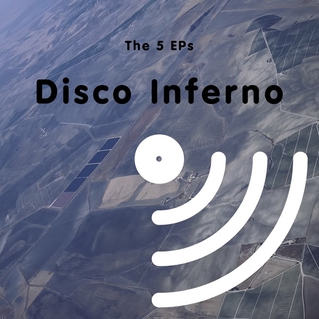
Disco Inferno The 5 EPs

Pop history is replete with forgotten revolutionaries, those ahead-of-their-time outcasts who were greeted with confusion and indifference, only receiving their dues once the world had caught up years later. And so it is with early Nineties sampling pioneers Disco Inferno, whose radical, intelligent, sensitive rewiring of the standard guitar/bass/drums aesthetic was so far out of step of Britpop’s nationalistic bombast that buying a DI record must have felt tantamount to treason. In 1995, outshone by Champagne Supernovas, priced out by Country Houses, they threw in the towel – only for their final two albums to be exhumed by One Little Indian nine years later, sparking a blog buzz that has grown steadily louder ever since. So, this timely new retrospective, spanning five out-of-print EPs originally released between 1992 and ’94, serves not only as a grab bag of thrilling sample-based experiments, but also as the fascinating linear narrative of a band struggling against the burgeoning Britpop behemoth.
It’s tempting for DI newcomers to focus on the freakshow elements of the band’s modus operandi, namely that saturation of found-sound textures. Yet first EP Summer’s Last Sound acts as a sharp demonstration that the band’s sampling was never just tacked on for the sake of it, but was rather an integral element of a complex whole. The title track opens with the air thick with birdsong, conjuring the ambience of a hazy summer’s evening – and yet as the tweeting grows more frantic and Ian Crause’s feverish vocals enter the fray, it’s clear that this is no idyll, but rather a horrifying scene where an immigrant is kicked to death, with no hope of the perpetrator being brought to justice. ‘Love Stepping Out’ is of a similar ilk, its shimmering arpeggios and ambiguous church bells laying the groundwork for another tale of assault.
Second EP A Rock To Cling To also has a similar air of coherence, despite its two songs being polar opposites – the yin of the slinky title track, where Crause’s vocals are seemingly backed by the ghost of a rock band playing in the next room, balanced by the yang of ‘From The Devil To The Deep Blue Sea’, an unnerving, meandering 10-minute instrumental that never outstays its welcome.
It’d be wrong to describe these first two EPs as especially difficult, but they do require the listener to do some legwork. Third EP The Last Dance is significant, then, as the concept of radio-friendliness enters the band’s consciousness, the lead track being the best single that New Order never released. And yet, this being Disco Inferno, things are never quite that straightforward. Not only is ‘The Long Dance’, the track’s alternate take, actually much punchier (and, indeed, New Order-ier) than ‘The Last Dance’, but then sandwiched between the two is ‘DI Go Pop’, which, if the title is to be taken at face value, must mark history’s single most misguided attempt at cracking the mainstream. Crause spits out his lyrics amidst a woozy cacophony akin to a Walkman warping and unspooling, to create a truly exhilarating rollercoaster ride. Bruno Brookes wouldn’t have known what hit him.
If The Last Dance is Disco Inferno’s pop EP that never was, follow-up Second Language comprises their feel-good EP that never was. ‘The Atheist’s Burden’ is a refreshingly positive, ingenuous response to the snarky irony with which the Nineties became synonymous, a wide-eyed ode to getting up at 4:30am to listen to the birdsong, “before the cynics have got out of bed”. But it doesn’t last. The EP’s title track opens with crisp, bright guitar, and things build subtly as Crause recounts a tale of trying to communicate with a non-native speaker, culminating with the bittersweet resignation “We just smile” – before his frustration boils over and he takes it out on his whammy bar. By the EP’s end, the tricksy ‘A Little Something’ finds Crause overrun by relationship woes, debt collectors, junk food, sleeplessness and the fear of an office job.
By this point, art was imitating life, with the band being completely overrun by Liam, Damon and co. The cartoonishness of final EP It’s A Kid’s World not only wryly satirizes the simplistic superficiality of Britpop’s worst excesses, but it also represents DI’s final desperate attempt at gaining recognition. The title track is eye-catching enough, with children’s TV ephemera layered over a drum beat borrowed from Iggy Pop’s ‘Lust For Life’, but the coarse nihilism of ‘A Night On The Tiles’ goes even further, making like an attention-seeking toddler. Of all people, it samples Edith Piaf, as if to demonstrate how far from the zeitgeist the band have fallen. By closing track ‘Lost In Fog’, DI are utterly defeated. Never mind lost in fog – the clunking machinery and malfunctioning electronics suggest the band are lost in space, completely cut adrift. Casting one final look at the scene below, Crause deems it “deserted, godless, forgotten”. Disco Inferno split shortly afterwards.
The curious may delve into the The 5 EPs, attracted by DI’s quietly building reputation for their pioneering sample work. Yet what they will find in these 15 tracks is so much more than novelty experimentation, but rather an inordinately inventive, profound, perceptive band, captured over a fascinating period of their career. That they remained so obscure for so long is Britpop’s forgotten crime.

Saturday, October 22, 2011

Pink Floyd - The Discovery Studio Album Box Set


This 16 disc box set includes all of Pink Floyd’s fourteen studio albums from 1967′s Piper at the Gates of Dawn to 1994′s The Division Bell. All of the albums have been digitally remastered by James Guthrie (who co-produced The Wall.) 
Contains the following 14 remastered studio albums:
The Piper At The Gates Of Dawn
A Saucerful Of Secrets
More
Ummagumma
Atom Heart Mother
Meddle
Obscured By Clouds
The Dark Side Of The Moon
Wish You Were Here
Animals
The Wall
The Final Cut
A Momentary Lapse Of Reason
The Division Bell

Wupload
Download part 9

Fileserve
File name: Pink Floyd - The Discovery Studio Album Box Set 16CD Boxset Remastered.part01.rar
File name: Pink Floyd - The Discovery Studio Album Box Set 16CD Boxset Remastered.part02.rar
File name: Pink Floyd - The Discovery Studio Album Box Set 16CD Boxset Remastered.part03.rar
File name: Pink Floyd - The Discovery Studio Album Box Set 16CD Boxset Remastered.part04.rar
File name: Pink Floyd - The Discovery Studio Album Box Set 16CD Boxset Remastered.part05.rar
File name: Pink Floyd - The Discovery Studio Album Box Set 16CD Boxset Remastered.part06.rar
File name: Pink Floyd - The Discovery Studio Album Box Set 16CD Boxset Remastered.part07.rar
File name: Pink Floyd - The Discovery Studio Album Box Set 16CD Boxset Remastered.part08.rar
File name: Pink Floyd - The Discovery Studio Album Box Set 16CD Boxset Remastered.part09.rar