Artist: The Cinematic Orchestra
Title Of Album: In Motion #1
Year Of Release: 25 June, 2012
Label: Ninja Tune
Genre: Broken Beat, Nu Jazz, Nu Soul
Quality: mp3
Bitrate: 320 kbps
Total Time: 01:19:48 min
Total Size: 188 mb
WebSite: juno.co.uk
TRACKLIST
1. Necrology [8:20]
2. Lapis (feat. Austin Peralta) [8:58]
3. Outer Space (feat. Dorian Concept & Tom Chant) [9:26]
4. Dream Work (feat. Dorian Concept & Tom Chant) [9:46]
5. Entr'acte [20:12]
6. Regen (feat. Grey Reverend) [11:51]
7. Manhatta [11:15]
Download
Saturday, April 14, 2012
Wednesday, April 11, 2012
Matana Roberts - Live in London (2011)
Matana Roberts (pronounced Mah-tah-Na) is a dynamic saxophonist, composer, and improviser whose music exposes the mystical roots and spiritual traditions of African American creative expression. Live In London, the follow-up to her acclaimed debut The Chicago Project, features her UK band including pianist Robert Mitchell, bassist Tom Mason, and drummer Chris Vatalaro of Antibalas. Recorded live at the Vortex Jazz Club in early 2009 by BBC Radio 3, Roberts takes us on an autobiographical tale of her music heritage, peers, and future. Beginning with a haunting 37-minute overhaul of Frankie Sparo s My Sistr, the album distills Roberts various influences to reinforce her uniqueness, informed by collaborations with jazz greats such as Steve Lacey, Vijay Iyer, and Fred Anderson and rock notables such as Godspeed You! Black Emperor (who invited Roberts to perform at their ATP UK event in December), TV On The Radio, and various Thrill Jockey projects.
Wadada Leo Smith's Mbira - Dark Lady Of The Sonnets (2011)
Wadada Leo Smith's Mbira is an ensemble that works within the idiom of American creative music but also in the realms of the Mbira music of the Shona culture in Zimbabwe and even traditional Chinese music. With pipa player Min Xiao-Fen and drummer Pheeroan akLaff, Wadada Leo Smith has produced an album that is powerful and instantly captivating, ancient and contemporary at the same time. Dark Lady of the Sonnets contains five compositions by Smith, ranging from a memorial for his late mother Sarah Bell Wallace to the title-track inspired by the great Billie Holiday. Dark Lady of the Sonnets is released to coincide with the celebration of Wadada Leo Smith's 70th birthday at the Roulette Theater, in Brooklyn, New York, on December 15 and 16, 2011. In connection with these two concerts, Mbira as well as five other groups led by Smith (String Quartet Plus, the Golden Quartet, the Golden Quintet, Organic and the Silver Orchestra) will perform.
Tuesday, April 10, 2012
Tim Berne - Snakeoil (2012)
After compelling contributions to ECM discs by David Torn and Michael Formanek, here is Tim Berne s first leader date for the label and his first studio record in 8 years. Snakeoil introduces a fascinating ensemble, a chamber-like group in Berne s words, albeit one that packs some power. Tim s clear alto is heard with Oscar Noriega s earthy clarinets, Mat Mitchell s cryptic piano, and Ches Smith s tone-conscious drums, tympani, gongs and congas. Two years of wood-shedding preceded the recording of Snakeoil at New York s Avatar Studios early in 2011, and the band was ready to roar. The album highlights Berne s compositional style original and avant-garde yet perhaps more accessible on this outing.
Cecil Taylor - Almeda (1996)
In the nearly forty years since the recording of Unit Structures, Cecil Taylor has steadfastly developed his orchestral music as arguably the most unique musical expression of one of the (jazz) world's most intelligent and idiosyncratic minds. Recorded during the Total Music Meeting in Berlin on November 2, 1996, Almeda is an honest documentation of a single Taylor "composition for large ensemble.
It begins, as has generally been the case in recent years, with the leader vocalizing, intoning words and sounds, eerie and earthy, that set the stage for the piece's evolution. Taylor leaves plenty of space for the individual instrumentalists to express themselves before joining the group on piano. Two longtime associates, bassist Dominic Duval and drummer Jackson Krall, provide a tonal and rhythmic underpinning which coheres the probing, conversational horn interaction among trumpeter Chris Matthay; trombonist Jeff Hoyer; saxophonists Elliott Levin, Chris Jonas, and Harri Sjöström; and the distinctive cellist Tristan Honsinger.
There is genuine drama in the music, which is in many ways narrative, yet indescribable. There's a sense of humanity and natural order to it that leads one to believe that although it sounds like no other music, it does have its own place in describing something of this universe, or perhaps out of it. It is a soundtrack for the world of Cecil Taylor, which is indeed a very interesting world. There's sensitivity and strength, foreboding and joy, power and delicacy, conflict and conviction. It's all very refreshing and intriguing, unlike anything else in both its mechanics and spirituality.
At the piano, Taylor remains a force of nature, capable of expressing the full range of emotions from the most delicate to the most intense, with a sense of pathos and humor, and inspiring his followers' incredibly creative improvisations. The music is both energizing and cathartic. It draws in the attentive listener and rewards them with an unparalleled experience that awakens the imagination and provides an escape from and insight into this world.
Thursday, April 5, 2012
Robert Glasper Experiment - Black Radio (2012)
Robert Glasper Experiment will release Black Radio (Blue Note Records/EMI), a future landmark album that boldly stakes out new musical territory and transcends any notion of genre, drawing from jazz, hip hop, R&B and rock, but refusing to be pinned down by any one tag. The fi rst full-length album from the GRAMMY-nominated keyboardist's electric Experiment band--saxist/vocoderist Casey Benjamin, bassist Derrick Hodge, and drummer Chris Dave--Black Radio also features many of Glasper's famous friends from the spectrum of urban music, seamlessly incorporating appearances from a jaw-dropping roll call of special guests including Erykah Badu, Bilal, Lupe Fiasco, Lalah Hathaway, Shafi q Husayn (Sa-Ra), KING, Ledisi, Chrisette Michele, Musiq Soulchild, Meshell Ndegeocello, Stokley Williams (Mint Condition), and yasiin bey (Mos Def).
Throughout, the Experiment wears its eclecticism on its sleeve, presenting new collaborative originals and surprising cover songs. They transform the Afro-Cuban standard "Afro Blue" with Badu, Sade's "Cherish The Day" with Hathaway, David Bowie's "Letter to Hermione" with Bilal, and Nirvana's "Smells Like Teen Spirit" with Benjamin's vocoder vocal.
Georgia Anne Muldrow - Seeds (2012)
SomeOthaShip Connect is set to release Georgia Anne Muldrow's upcoming album, Seeds, March 26th 2012. Seeds not only marks Georgia's first album as a vocalist on an outside producers instrumentation, it also marks the first full length project Madlib has produced exclusively for a female vocalist.
Says Georgia, Not handling production and focusing strictly on the lyrics and vocals was a very different experience for me. It was as if I walked into someone else's world and built a hut. But I'm very proud of the hut we built and am excited about the release.
Lyrically Muldrow's themes on this album center around her wonder about the elements of life and the interconnected nature of the universe. The first single, Seeds asks the people of the world to elevate their consciousness and take responsibility for the future of our children and the planet. Another highlight track, "Wind," tells an esoteric story about a fisherman and his family and how the wind carries people's stories, traditions and soul.
Says Georgia, Not handling production and focusing strictly on the lyrics and vocals was a very different experience for me. It was as if I walked into someone else's world and built a hut. But I'm very proud of the hut we built and am excited about the release.
Lyrically Muldrow's themes on this album center around her wonder about the elements of life and the interconnected nature of the universe. The first single, Seeds asks the people of the world to elevate their consciousness and take responsibility for the future of our children and the planet. Another highlight track, "Wind," tells an esoteric story about a fisherman and his family and how the wind carries people's stories, traditions and soul.
Sunday, February 5, 2012
The Elementary Revolt
This will be an instant-bookmark of yours, believe me. They deliver the finest underground music (and not so underground) in the field of Hardcore, Punk, Crust, Slowcore, Noise, Screamo and Metal. You'll get plenty of jaw droppings posts, with the bands of your youth all displayed in emotionally driven posts. Check out for the greatness that spill out from Give Up The Ghost reissues or Converge reprints of early materials. And you will likely to check out also unknown bands from your hometown.
For me is a total winner and I can surf ER pages for hours and hours, catching releases of brand new bands and cult glories as well.
I bought also one of their t-shirts because they deserve it ;)
Thursday, January 12, 2012
Dinosaur Jr. - You're Living All Over Me [Remastered]
A blitzkrieg fusion of hardcore punk, Sonic Youth-style noise freak-outs, heavy metal, and melodic hard rock in the vein of Neil Young, You're Living All Over Me was a turning point in American underground rock & roll. With its thin, unbalanced mix, the album sounds positively menacing and edgy -- Lou Barlow's bass barrels forward over Murph's clanking drums, with J Mascis' guitar twisting pummeling riffs and careening, occasionally atonal solos. It established guitar heroics as a part of indie rock, bringing the noise of Sonic Youth into more conventional song structures. Also, Mascis' laconic, self-absorbed whine was a distinct departure from the furious post-hardcore rants, or the mumbling Michael Stipe imitations, that dominated indie rock. While the songwriting is occasionally uneven, the best moments of You're Living All Over Me -- "Little Fury Things," "Raisans," "In a Jar," and Barlow's proto-Sebadoh "Poledo" -- retain their power, and it's possible to hear the record's influence throughout alternative rock.
Saturday, November 26, 2011
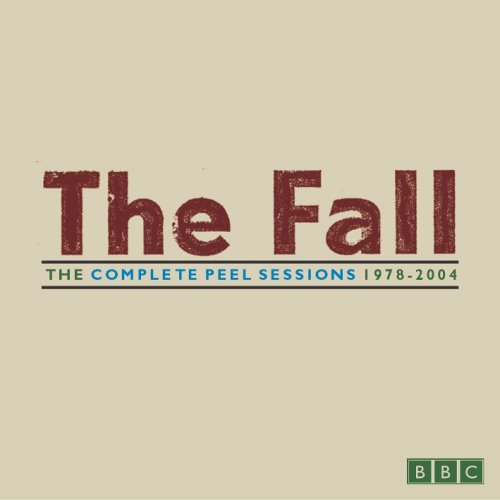
The Fall - The Complete Peel Sessions 1978-2004
This was posted long time ago on these very pages, I know. But links are broken so a re-up is absolutely deserved. I'm bit lazy lately, taken by a lot of stupid things in "real life". And of course by MW3. Anyway, I feel that this comprensive labour of love, that goes by the name of "The Complete Peel Sessions", will make your week-end a bit better, either if you're an hardcore Fall fan-boy/girl or random listener of the "best band in the world". There's a lot of music in it and is top class. | |||||||
CD1
CD2
CD3 part 1
CD3 part 2
CD4
CD5
CD6 part 1
CD6 part 2
CD3 and CD6 are comprised of two parts. Download both and then extract with winrar.
Sunday, November 20, 2011
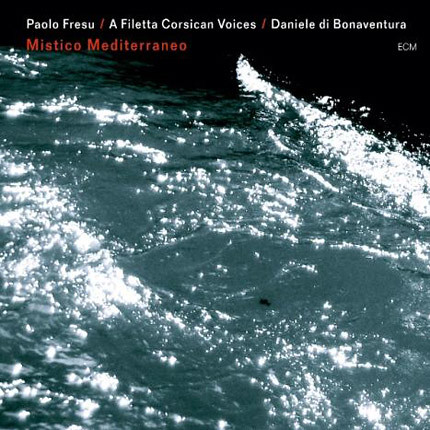
Paolo Fresu/A Filetta Corsican Voices/Daniele di Bonaventura - Mistico Mediterraneo
At a time when cross-pollination has become the new musical evolution, ECM Records remains at the vanguard. Whether blending music of Tunisian origins with European impressionistic concerns and hints of New World groove on oudist Anouar Brahem's The Astounding Eyes of Rita (2009), or marrying Persian percussion with Baroque instrumentation and Fourth World improvisation on keyboardist Jon Balke's Siwan (2009), few labels (if any) can boast such an impressive catalogue of constant innovation, where unfailing respect for tradition is matched by an equal disregard for the hard-coded conventions that seem, on the surface, inherent to its very definition.
Mistico Mediterraneo follows in the footsteps of Jan Garbarek and The Hillard Ensemble's (so far) trifecta, including Officium Novum (2010), where the saxophonist and classical vocal group turned eastward, further enriching an improvised language they've honed for nearly two decades. But as a collaboration between trumpeter Paolo Fresu, Corsican vocal group A Filetta, and bandoeonist Daniele di Bonaventura, the roots of Mistico Mediterraneo—and its ultimate destination—are inherently different. Rather than looking to an extant classical repertoire that crosses not just centuries, but millennia, Mistico Mediterraneo's song cycle is of distinctly contemporary origins, though the polyphonic tradition at its core dates back to the 9th century. The music may sometimes feel of timeless antiquity, but hints of modernity abound, as in French film composer Bruno Colais' "Le lac," where Fresu's electronically treated horn creates a near-ambient soundscape, over which di Bonaventura's bandoneon evokes a rippling, Steve Reich-ian pulse before A Filetta enters, with a plaintive chant revolving around a repetitive, descending three-chord pattern.
The bass-heavy A Filette—now led by Jean-Claude Acquaviva who, joining the group at 13, has since become its primary composer, contributing five pieces to this program—brings a different vocal tradition to the table than The Hilliards, one as steeped in the folk tradition of its locale as it is a classical one, blending sacred and secular texts sung in French, Corsican and Latin. Above it all Fresu, a trumpeter with his own deep roots in the jazz vernacular of Chet Baker and Miles Davis, intertwines with A Filette's seven voices, while engaging with di Bonaventura—surely the European answer to South American bandoneon master (and label-mate) Dino Saluzzi—on a profoundly interpretive level. This sublime combination of voice, horn and reeds is particularly effective on Jean-Michel Giannelli's "Dies Irae" which, despite its Latin text and cascading voices, somehow feels cousin to bassist Charlie Haden's often-covered "Silence."
Mistico Mediterraneo has something else that Garbarek/The Hilliards don't—a pulse. Tracks like "Gloria," with di Bonaventura's propulsive, ebb-and-flow rhythm supported by A Filette's similarly driven delivery, meet modernity with the timbral oscillations of Fresu's horn, while the all-vocal miniature, "La folie du Cardinal," would be relentless if it weren't only a couple minutes in duration. It all comes together in a recording that might be compared too quickly to Garbarek and The Hilliards' ongoing collaboration, but with music at least partly rooted in more temperate locales farther south, the superb Mistico Mediterraneo sings with a resonant collective voice all its own.
Track Listing: Rex tremendae; Liberata; Da tè à mè; Le lac; Dies irae; Gloria; Corale; La folie du Cardinal; U sipolcru; Scherzi veranili; Figliolu d'ella; Gradualis; Sanctus.
Personnel: Paolo Fresu: trumpet, flugelhorn; Daniele di Bonaventura: bandoneon. A Filetta: Jean-Claude Acquaviva: seconda; Paul Giansily: terza; Jean-Luc Geronimi: seconda; José Filippi: bassu; Jean Sicurani: bassu; Maxime Vuillamier: bassu; Ceccè Acquaviva: bassu.
Mistico Mediterraneo follows in the footsteps of Jan Garbarek and The Hillard Ensemble's (so far) trifecta, including Officium Novum (2010), where the saxophonist and classical vocal group turned eastward, further enriching an improvised language they've honed for nearly two decades. But as a collaboration between trumpeter Paolo Fresu, Corsican vocal group A Filetta, and bandoeonist Daniele di Bonaventura, the roots of Mistico Mediterraneo—and its ultimate destination—are inherently different. Rather than looking to an extant classical repertoire that crosses not just centuries, but millennia, Mistico Mediterraneo's song cycle is of distinctly contemporary origins, though the polyphonic tradition at its core dates back to the 9th century. The music may sometimes feel of timeless antiquity, but hints of modernity abound, as in French film composer Bruno Colais' "Le lac," where Fresu's electronically treated horn creates a near-ambient soundscape, over which di Bonaventura's bandoneon evokes a rippling, Steve Reich-ian pulse before A Filetta enters, with a plaintive chant revolving around a repetitive, descending three-chord pattern.
The bass-heavy A Filette—now led by Jean-Claude Acquaviva who, joining the group at 13, has since become its primary composer, contributing five pieces to this program—brings a different vocal tradition to the table than The Hilliards, one as steeped in the folk tradition of its locale as it is a classical one, blending sacred and secular texts sung in French, Corsican and Latin. Above it all Fresu, a trumpeter with his own deep roots in the jazz vernacular of Chet Baker and Miles Davis, intertwines with A Filette's seven voices, while engaging with di Bonaventura—surely the European answer to South American bandoneon master (and label-mate) Dino Saluzzi—on a profoundly interpretive level. This sublime combination of voice, horn and reeds is particularly effective on Jean-Michel Giannelli's "Dies Irae" which, despite its Latin text and cascading voices, somehow feels cousin to bassist Charlie Haden's often-covered "Silence."
Mistico Mediterraneo has something else that Garbarek/The Hilliards don't—a pulse. Tracks like "Gloria," with di Bonaventura's propulsive, ebb-and-flow rhythm supported by A Filette's similarly driven delivery, meet modernity with the timbral oscillations of Fresu's horn, while the all-vocal miniature, "La folie du Cardinal," would be relentless if it weren't only a couple minutes in duration. It all comes together in a recording that might be compared too quickly to Garbarek and The Hilliards' ongoing collaboration, but with music at least partly rooted in more temperate locales farther south, the superb Mistico Mediterraneo sings with a resonant collective voice all its own.
Track Listing: Rex tremendae; Liberata; Da tè à mè; Le lac; Dies irae; Gloria; Corale; La folie du Cardinal; U sipolcru; Scherzi veranili; Figliolu d'ella; Gradualis; Sanctus.
Personnel: Paolo Fresu: trumpet, flugelhorn; Daniele di Bonaventura: bandoneon. A Filetta: Jean-Claude Acquaviva: seconda; Paul Giansily: terza; Jean-Luc Geronimi: seconda; José Filippi: bassu; Jean Sicurani: bassu; Maxime Vuillamier: bassu; Ceccè Acquaviva: bassu.
Wednesday, November 16, 2011
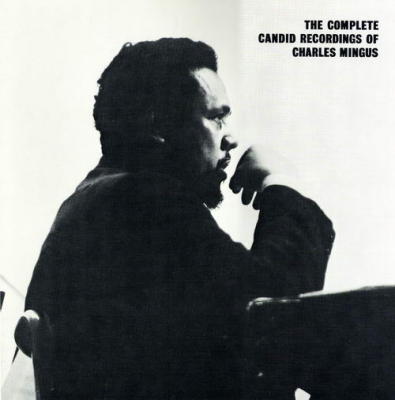
Charles Mingus - The Complete Candid Recordings
Bassist/leader Charles Mingus cut some of his most exciting and rewarding recordings for Candid in 1960 and this superb four-LP set (which unfortunately is a limited edition) contains all of the music except for a couple of alternate takes that showed up later on. Five selections feature the brilliant piano-less quartet of Eric Dolphy (on alto, bass clarinet, and flute), trumpeter Ted Curson, Mingus, and drummer Dannie Richmond, and these are highlighted by the bass clarinet-bass conversation on "What Love" and the interplay between the four musicians on the very memorable "Folk Forms No. 1." Other musicians are added to six other selections (including the 19-minute jam "MDM") and five other numbers feature trumpeter Roy Eldridge who is teamed with altoist Dolphy on three of the songs; those pieces originally appeared on the Newport Rebels' LP. This is a highly recommended set.
Download Disc 3
Monday, November 14, 2011
Yo-Yo Ma - J. S. Bach: The 6 Unaccompanied Cello Suites
Yo-Yo Ma recorded J.S. Bach's Six Unaccompanied Cello Suites on two occasions, first for release on LP in 1983, then again in 1997 on CD. It is the 1983 recording that is presented in Sony's Great Performances line, and the original digital recordings have been processed through direct stream digital to enhance the cello's sound with greater warmth and presence. Ma's readings of Bach are fairly liberal in rhythm and phrasing, and are decidedly more intuitive than analytical, with plenty of rubato and elongation of lines to suggest something like a free Romantic interpretation, far from any Baroque period re-creation. For some listeners who are fans of historically informed or authentic performances of Bach, this may be a stumbling block; but for most, Ma's expressive playing will seem satisfactory and quite enjoyable, if not exactly revelatory. There is a pensive quality to these performances that will strike some listeners as introspective and probing, while others may find them a bit self-indulgent and studied; either way, Ma falls short of ecstatic communion with the music and delivers a technically polished and intelligent performance that has grace and elegance, if not the deepest emotions or visionary heights. Competing with the magnificent recordings by Pablo Casals, Pierre Fournier, and Mstislav Rostropovich, this set can't be regarded as the last word in Bach's Cello Suites; however, it has held its own for many listeners over the years, and it deserves its place in Sony's valued reissue series.
Sunday, November 13, 2011
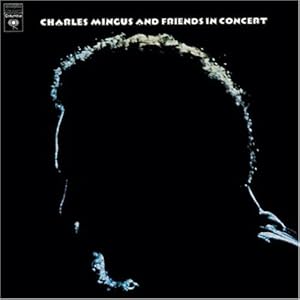
Charles Mingus and Friends in Concert
Most of Charles Mingus's larger-group recordings, particularly in the later part of his career, tended to be unruly and somewhat undisciplined. This two-CD reissue set (which adds five selections to the original two-LP program), which celebrated Mingus's return to jazz after six years of little activity. Such great jazzmen as baritonist Gerry Mulligan, tenor saxophonist Gene Ammons, altoist Lee Konitz, pianist Randy Weston, James Moody (heard on flute) and a variety of Mingus regulars had a chance to play with the great bassist; even fellow bassist Milt Hinton and Bill Cosby (taking a humorous scat vocal) join in. Most of the music is overly loose but the overcrowded "E's Flat, Ah's Flat Too" and particularly the "Little Royal Suite" are memorable. The "Little Royal Suite," in addition to Ammons, Konitz, Mulligan, Charles McPherson and Bobby Jones, features an 18-year old Jon Faddis (who was sitting in for an ailing Roy Eldridge) stealing the show.
Download Disc 2
Saturday, November 12, 2011
Charles Mingus - Mingus Ah Um
Charles Mingus' debut for Columbia, Mingus Ah Um is a stunning summation of the bassist's talents and probably the best reference point for beginners. While there's also a strong case for The Black Saint and the Sinner Lady as his best work overall, it lacks Ah Um's immediate accessibility and brilliantly sculpted individual tunes. Mingus' compositions and arrangements were always extremely focused, assimilating individual spontaneity into a firm consistency of mood, and that approach reaches an ultra-tight zenith on Mingus Ah Um. The band includes longtime Mingus stalwarts already well versed in his music, like saxophonists John Handy, Shafi Hadi, and Booker Ervin; trombonists Jimmy Knepper and Willie Dennis; pianist Horace Parlan; and drummer Dannie Richmond. Their razor-sharp performances tie together what may well be Mingus' greatest, most emotionally varied set of compositions. At least three became instant classics, starting with the irrepressible spiritual exuberance of signature tune "Better Get It in Your Soul," taken in a hard-charging 6/8 and punctuated by joyous gospel shouts. "Goodbye Pork Pie Hat" is a slow, graceful elegy for Lester Young, who died not long before the sessions. The sharply contrasting "Fables of Faubus" is a savage mockery of segregationist Arkansas governor Orval Faubus, portrayed musically as a bumbling vaudeville clown (the scathing lyrics, censored by skittish executives, can be heard on Charles Mingus Presents Charles Mingus). The underrated "Boogie Stop Shuffle" is bursting with aggressive swing, and elsewhere there are tributes to Mingus' three most revered influences: "Open Letter to Duke" is a suite of three tunes; "Bird Calls" is inspired by Charlie Parker; and "Jelly Roll" is an idiosyncratic yet affectionate nod to jazz's first great composer, Jelly Roll Morton. It simply isn't possible to single out one Mingus album as definitive, but Mingus Ah Um comes the closest.
Download
Thursday, November 10, 2011
The Kilimanjaro Darkjazz Ensemble - From The Stairwell
Upon listening to The Kilimanjaro Darkjazz Ensemble, one will find that their lengthy name is actually quite fitting to their sound. The hodgepodge septet of Europeans (the ‘Ensemble’) began its peculiar origin (‘Kilimanjaro’) when band founders Jason Köhnen (AKA breakcore musician Bong-Ra) and Gideon Kiers began merging their audio and visual skills to readapt old films such as Nosferatu and Metropolis. The ‘Darkjazz’ part of their title is just that, an arcane interpretation of the otherwise familiar jazz stylings we all know. While not as grim-sounding as their German contemporaries, Bohren & Der Club Of Gore, TKDE exhibits an interesting mix of the dismal and the serene while constructing an atmosphere that is easy to be immersed in.
From the Stairwell comes to us after two little-known, but otherwise well-received LPs; their 2006 eponymous debut and 2009’s Here Be Dragons. In their previous works, TKDE have had a troubled way with direction and structure which, while still interesting, lead listeners to blur the line between The Kilimanjaro Darkjazz Ensemble and their improvisational alter-ego band, The Mount Fuji Doomjazz Corporation. In finally setting the two bands apart, From the Stairwell takes us on a winding tour of more of everything that had initially made their music interesting. More trip-hop, more post-rock and more electronic bits. With that, it plays as their most distinguished and intentional effort yet.
From a sultry string section leading into sinister horn and bass tones, the opening track, All is One, carries itself into a delicate piano section reminiscent of a Miyazaki film. It’s the perfect opener for the album to preview what kind of new tricks TKDE has to offer on this release. As the song progresses into an irregular ride pattern behind queasy muted brass tones and a certain ominous drone, we get our first taste of Charlotte Cegarra’s eerie, hostile vocals that take us to a tense and smoky jazz club. This is where TKDE’s imagery begins.
Only fifteen minutes later are we taken into the unlikely gem Cocaine, which sees your ears stumbling into gritty, busy factory that seem to be operated by… no one? Ghosts? It might not fit into the jazz-influenced mold that the rest of the songs on the album do but it’s the most evident result of TKDE’s experimentation within a sound they are already comfortable with. This barren track is full of industrial tones, creeping along with machinery noises, reversed chimes and what appears to be samples of steam-powered mechanisms that just grow colder and more intense until an ambient light is reached near the end.
On later tracks, such as White Eyes, the hopeful Celladoor and Les Étoiles Mutantes (The Mutant Stars), the band shows off the recent addition of Tortoise-esque post-rock elements to their repertoire as well as a ton of electronic bleeps and fizzes, no doubt on account of Bong-Ra’s background. The latter track, while not the closer, brings the LP back to the atmosphere it started on in All is One, only on a higher plane, a sign that we’ve now come up From the Stairwell. The bending guitar tones and electric keys behind Cegarra’s echoing voice bring to mind some of Stars of the Lid’s earlier material and set the music in some sort of luxurious floating space beatnik club leaving the earth’s surroundings playing only the most sophisticated of future-jazz.
It’s a shame that TKDE thought it was necessary to include the 12-minute, drawn out drone-fest that is the actual closer, Past Midnight. Without that track, in the light of everything mentioned above, I would have forgotten about the few things I thought weak from this release: Sporadic encounters with long, dragging sections somewhere between filler and build-up with often no details of interest as well as very busy segments where too many tones are blending and it’s difficult to comprehend what is going on in an otherwise quite articulate release.
As much as The Kilimanjaro Darkjazz Ensemble’s brand of jazz isn’t mainstream material by any stretch, with From The Stairwell, they’ve made themselves accessible for the first time. By mastering what they already had to offer and then adding even more flesh to their bones, they’ve concocted a release bound to entice more than simply their obscure cult fan base. Finally established as a band with direction and intent, The Kilimanjaro Darkjazz Ensemble’s 3rd LP is one to be taken in by an audience as diverse as the influences present in it.
From the Stairwell comes to us after two little-known, but otherwise well-received LPs; their 2006 eponymous debut and 2009’s Here Be Dragons. In their previous works, TKDE have had a troubled way with direction and structure which, while still interesting, lead listeners to blur the line between The Kilimanjaro Darkjazz Ensemble and their improvisational alter-ego band, The Mount Fuji Doomjazz Corporation. In finally setting the two bands apart, From the Stairwell takes us on a winding tour of more of everything that had initially made their music interesting. More trip-hop, more post-rock and more electronic bits. With that, it plays as their most distinguished and intentional effort yet.
From a sultry string section leading into sinister horn and bass tones, the opening track, All is One, carries itself into a delicate piano section reminiscent of a Miyazaki film. It’s the perfect opener for the album to preview what kind of new tricks TKDE has to offer on this release. As the song progresses into an irregular ride pattern behind queasy muted brass tones and a certain ominous drone, we get our first taste of Charlotte Cegarra’s eerie, hostile vocals that take us to a tense and smoky jazz club. This is where TKDE’s imagery begins.
Only fifteen minutes later are we taken into the unlikely gem Cocaine, which sees your ears stumbling into gritty, busy factory that seem to be operated by… no one? Ghosts? It might not fit into the jazz-influenced mold that the rest of the songs on the album do but it’s the most evident result of TKDE’s experimentation within a sound they are already comfortable with. This barren track is full of industrial tones, creeping along with machinery noises, reversed chimes and what appears to be samples of steam-powered mechanisms that just grow colder and more intense until an ambient light is reached near the end.
On later tracks, such as White Eyes, the hopeful Celladoor and Les Étoiles Mutantes (The Mutant Stars), the band shows off the recent addition of Tortoise-esque post-rock elements to their repertoire as well as a ton of electronic bleeps and fizzes, no doubt on account of Bong-Ra’s background. The latter track, while not the closer, brings the LP back to the atmosphere it started on in All is One, only on a higher plane, a sign that we’ve now come up From the Stairwell. The bending guitar tones and electric keys behind Cegarra’s echoing voice bring to mind some of Stars of the Lid’s earlier material and set the music in some sort of luxurious floating space beatnik club leaving the earth’s surroundings playing only the most sophisticated of future-jazz.
It’s a shame that TKDE thought it was necessary to include the 12-minute, drawn out drone-fest that is the actual closer, Past Midnight. Without that track, in the light of everything mentioned above, I would have forgotten about the few things I thought weak from this release: Sporadic encounters with long, dragging sections somewhere between filler and build-up with often no details of interest as well as very busy segments where too many tones are blending and it’s difficult to comprehend what is going on in an otherwise quite articulate release.
As much as The Kilimanjaro Darkjazz Ensemble’s brand of jazz isn’t mainstream material by any stretch, with From The Stairwell, they’ve made themselves accessible for the first time. By mastering what they already had to offer and then adding even more flesh to their bones, they’ve concocted a release bound to entice more than simply their obscure cult fan base. Finally established as a band with direction and intent, The Kilimanjaro Darkjazz Ensemble’s 3rd LP is one to be taken in by an audience as diverse as the influences present in it.
Wednesday, November 9, 2011
Mingus on Mingus
Directed by Kevin Ellington Mingus
Mingus on Mingus is a documentary of a grandson discovering the truths behind the legend of the grandfather he never knew. Known to the world as a composer who left one of the largest musical legacies of the 20th century, the film highlights the voices of the people he touched and the places he lived. While following the search for a grandfather and a true jazz legend, we rediscover both, the man and the artist: Charles Mingus.
Tuesday, November 8, 2011
Godspeed You Black Emperor! - Lift Your Skinny Fists Like Antennas to Heaven
Lift Your Skinny Fists Like Antennas to Heaven, the much-anticipated follow-up to Godspeed You Black Emperor's Slow Riot, is a double-disc achievement of four works (each with multiple parts): "Storm," "Static," "Sleep," and "Antennas to Heaven." It is a windfall for any fan of ambient pop, orchestral rock, space rock, or simply lush string arrangements who understands how powerful love, melancholy, and frustration can be. The main complaint voiced by critics of Godspeed's music is that their works just repeat the same pattern: start out sparse and slow, build-build-build, crescendo. While there are certainly crescendos, there is no such predictable pattern repeated among the works on Lift Your Skinny Fists Like Antennas to Heaven -- it's loaded with dynamics, unexpected sections, strong emotions and beauty.
The album opener, "Storm," is a leap for GYBE! that, alone, makes this release worth getting. It's a rapturous work that rises with a potent melancholy, driven by heartrending emotions. "Storm" vents a powerful frustration (each listener can insert their own reasons why) with majestic screams of strings, guitars, and layers, resulting in a climactic and passionate soaring. It eventually winds down into an exhausted aftermath of piano, underlying drones, and frustrated rants. The second piece, "Static," is a wandering, isolationist piece of bleak expanses shaded with darker emotions, but the remaining two works raise the album back up to the impressive standard set by the opening cut, though with less furor and even more loveliness. "Sleep" opens with an elderly gentleman reminiscing about Coney Island, and his frank and amusing narration briefly recalls the recordings of David Greenberger and scenes from the documentary Vernon, FL. This narration is followed by a slow and melodic piece featuring a pseudo-theremin effect amidst all of the other instrumentation. "Antennas to Heaven" opens with someone playing acoustic guitar, singing "What'll We Do with the Baby-O," soon washed over with sound, which then gives way to a brief chorus of glockenspiels, and on.
During most of Lift Your Skinny Fists Like Antennas to Heaven, musical and emotional opposites alternate as regularly, and naturally, as breathing: delicate string work and rock-out guitar and drums, spoken word and walls of sound, gracious and possessed, tip-toes and cliff-diving, dark hallways and blinding sunshine.
The album opener, "Storm," is a leap for GYBE! that, alone, makes this release worth getting. It's a rapturous work that rises with a potent melancholy, driven by heartrending emotions. "Storm" vents a powerful frustration (each listener can insert their own reasons why) with majestic screams of strings, guitars, and layers, resulting in a climactic and passionate soaring. It eventually winds down into an exhausted aftermath of piano, underlying drones, and frustrated rants. The second piece, "Static," is a wandering, isolationist piece of bleak expanses shaded with darker emotions, but the remaining two works raise the album back up to the impressive standard set by the opening cut, though with less furor and even more loveliness. "Sleep" opens with an elderly gentleman reminiscing about Coney Island, and his frank and amusing narration briefly recalls the recordings of David Greenberger and scenes from the documentary Vernon, FL. This narration is followed by a slow and melodic piece featuring a pseudo-theremin effect amidst all of the other instrumentation. "Antennas to Heaven" opens with someone playing acoustic guitar, singing "What'll We Do with the Baby-O," soon washed over with sound, which then gives way to a brief chorus of glockenspiels, and on.
During most of Lift Your Skinny Fists Like Antennas to Heaven, musical and emotional opposites alternate as regularly, and naturally, as breathing: delicate string work and rock-out guitar and drums, spoken word and walls of sound, gracious and possessed, tip-toes and cliff-diving, dark hallways and blinding sunshine.
Monday, November 7, 2011
Matana Roberts - COIN COIN Chapter One: Gens de couleur libres
Independent rock labels have made great headway in turning on listeners to challenging, cutting-edge jazz. Homestead and Henry Rollins’ defunct 213 and Infinite Zero labels helped expose David S. Ware, Matthew Shipp, and William Parker to more casual jazz fans in the early 90s, and these and other avant jazz artists have been doing great work for Thirsty Ear’s Blue Series over the last decade. The fact that alto saxophonist and composer Matana Roberts’ extraordinary new album COIN COIN is released on Constellation, a label better known for serious, somber rock, tells us Roberts knows this music deserves and can net a wider audience than more traditional jazz records would reach. In fact, the Chicago-born Roberts was already something of a post-rock fellow traveler, playing on Godspeed You! Black Emperor’s Yanqui U.X.O. and inviting members of Tortoise to guest on one of her albums. She was also in jazz trio Sticks and Stones alongside Josh Abrams and Chad Taylor, two other players active in Chicago’s cozy jazz/rock/whatever milieu. But in the end, making these connections primarily serves to pique curiosity and draw in listeners, as COIN COIN is a pure celebration of jazz.
COIN COIN was recorded live in the studio of Montreal’s Hotel2Tango last July with Roberts leading a group of 15 musicians playing multiple saxophones, two trumpets, two basses, two violins, a cello, piano, prepared guitar, drums, musical saw, and doudouk. That’s a large group, and the inclusion of the last two instruments especially might lead one to think the arrangements are needlessly crowded or exotic, but it certainly never feels like that. Edited down from a 90-minute performance to an hour, the music can be busy, even noisy, but these passages fit smartly within a larger compositional whole.
The album begins with a scorching solo burst of saxophone that recalls the fire music cries of Albert Ayler, Archie Shepp, and late-period John Coltrane. What follows over the next six minutes of opening track “rise” is a composition that references multiple styles of jazz, then detours into wholly original territory, most notably during Roberts’ theatrical spoken word/half-sung portions. These vocals, featuring Gitanjali Jain alongside Roberts, appear throughout the album, with a narrative that concerns the history of slavery in America and how it continued to affect and inform the lives of African Americans throughout the 20th century. Some sections offer stronger images and impressions than others, while Roberts and Jain’s intertwining vocals often favor ambiguity and emotional resonance over clarity and pedagogy. While I personally tend to shy away from spoken word or vocalese in jazz, these vocals are essential to its success.
COIN COIN’s middle section serves as a self-contained example of what Roberts and her band have accomplished on a larger scale. “kerasia” begins with a repetitious modal vamp before the music softens to allow Roberts’ and Jain’s vocals to dominate the track. The instruments soon come back on full blast, with Roberts leading the pack, picking the opening theme back up before sliding into a Dixieland romp that eventually mutates into a free jazz spree. This then segues into the centerpiece of the album, “libation for Mr. Brown: Bid em in…,”a soulful a cappella gospel blues chant that recalls a slave auction. In just 15 minutes, these tracks cover an astonishing amount of musical ground, highlighting Roberts’ skill as both composer and performer.
By the time the album nears its end, you may feel like you’ve already been on an exhausting, emotionally charged trip, but the most intense music is saved for last two tracks. “i am” features stunning wordless vocals over rambunctious musicianship, while “how much would you cost?” closes out the album with a moving dedication to Roberts’ mother. The exuberant cheers and applause from the small studio audience at performance’s end remind you that what you’ve just heard has happened in real time, making it all the more impressive.
COIN COIN, the first half of a larger politically-charged and personal work, is one of those records you didn’t know you were waiting for, couldn’t expect you wanted or needed to hear. It’s already grabbed the attention of both jazz aficionados and its more casual fans, impressing both in equal fashion. This is complex, life-affirming music that’s both serious and playful, steeped in tradition yet as highly original and forward-thinking as anything you’re likely to hear this year.
01. rise
02. pov piti
03. song for eulalie
04. kersaia
05. libation for Mr. Brown: Bid em in…
06. lulla/bye
07. i am
08. how much would you cost?
02. pov piti
03. song for eulalie
04. kersaia
05. libation for Mr. Brown: Bid em in…
06. lulla/bye
07. i am
08. how much would you cost?
Saturday, November 5, 2011
Konitz/Mehldau/Haden/Motian: Live at Birdland
The tunes are familiar, Great American Songbook and jazz standards all. So for those unfamiliar with the names involved in this quartet outing, the old complaint of "same old same old" could surface. But with alto saxophonist Lee Konitz at the top of the listing, "same old same old" gets rolled out the door.
Konitz, with over 60 years of professional experience—from the 1949 Birth of the Cool (Capitol Records, 1957) sessions with arranger Gil Evans and trumpeter Miles Davis, to the present day—is one of the most distinctively original of jazz artists. His plaintive, ghostly cry opens the set on "Loverman." The tune has been given stellar treatments by, most famously, singer Billie Holiday and alto saxophonist Charlie Parker, and here it announces an uncommon listening experience to follow. Konitz's alto saxophone tone is hollow and bitingly tart, with a hint of a growl scratching around the edges, an invitation to the spacious and thoughtful delicacy of Brad Mehldau's piano, the whisper and scratch of Paul Motian's drums, and the spare-but perfect placement of Charlie Haden's bass notes.
Even the youngster in the line-up, Mehldau, has more than two decades of recording and performing in the resume; so when a group like this gets together for an impromptu session at New York's Birdland—one of jazz's most productive live recording venues—magic can happen, and it did this night. It's not a magic of the look at me, virtuosic, fireworks variety, but one of a melding of four different and very experienced perspectives on some of those jazz tunes that seem—after all these years—to be coded in our DNA, the musicians becoming one on this outing, creating melodic mutations that give birth to new sonic entities, new species altogether, maybe even a new genus or two, recognizable, but very different from the original organisms while still exuding a quality of familiar beauty.
"Loverman," the opener, and Sonny Rollins' "Oleo" are in the new genus category. If taken in small doses on a casual or distracted listen, they can be unrecognizable in snippets, and seem like forarys into free jazz. In part, they may be. Konitz is especially loose in his interpretations, drifting and swirling around in a variety of melodic side eddies that drift at unexpected times—usually briefly—back into the mainstream flow.
"Lullaby of Birdland" and "I Fall In Love Too Easily" don't stray so far from what might be called standard interpretations, though it seems Konitz is trying to do just that, leaving Melhdau more the keeper of the melody, a task the pianist takes on with uncommon aplomb and originality and, yes, freedom.
Miles Davis' "Solar" is a tune that has managed to sound timeless for more than 50 years. Konitz staggers in here, with a rather harsh and stentorian tone, like a blaring shower singer, until four crisp alto notes, followed post-haste by the piano rolling with the same riff, announce the tune, and draw in the masterful wandering of Motian and Haden.
It's the title of another of the set's American Songbook tunes, "You Stepped Out of a Dream," that describes the mood. In the hands of these seasoned musicians, this music has an often skewed and surreal, out of a dream quality. We've heard them before, but never quite like this, unfolding in a way that doesn't quite make logical sense; revealing new and unexpected angles of their beauty.
Tracks: Loverman; Lullaby of Birdland; Solar; I Fall in Love Too Easily; You Stepped Out of a Dream.
Personnel: Lee Konitz: alto saxophone; Brad Mehldau: piano; Charlie Haden: bass; Paul Motian: drums.
Konitz, with over 60 years of professional experience—from the 1949 Birth of the Cool (Capitol Records, 1957) sessions with arranger Gil Evans and trumpeter Miles Davis, to the present day—is one of the most distinctively original of jazz artists. His plaintive, ghostly cry opens the set on "Loverman." The tune has been given stellar treatments by, most famously, singer Billie Holiday and alto saxophonist Charlie Parker, and here it announces an uncommon listening experience to follow. Konitz's alto saxophone tone is hollow and bitingly tart, with a hint of a growl scratching around the edges, an invitation to the spacious and thoughtful delicacy of Brad Mehldau's piano, the whisper and scratch of Paul Motian's drums, and the spare-but perfect placement of Charlie Haden's bass notes.
Even the youngster in the line-up, Mehldau, has more than two decades of recording and performing in the resume; so when a group like this gets together for an impromptu session at New York's Birdland—one of jazz's most productive live recording venues—magic can happen, and it did this night. It's not a magic of the look at me, virtuosic, fireworks variety, but one of a melding of four different and very experienced perspectives on some of those jazz tunes that seem—after all these years—to be coded in our DNA, the musicians becoming one on this outing, creating melodic mutations that give birth to new sonic entities, new species altogether, maybe even a new genus or two, recognizable, but very different from the original organisms while still exuding a quality of familiar beauty.
"Loverman," the opener, and Sonny Rollins' "Oleo" are in the new genus category. If taken in small doses on a casual or distracted listen, they can be unrecognizable in snippets, and seem like forarys into free jazz. In part, they may be. Konitz is especially loose in his interpretations, drifting and swirling around in a variety of melodic side eddies that drift at unexpected times—usually briefly—back into the mainstream flow.
"Lullaby of Birdland" and "I Fall In Love Too Easily" don't stray so far from what might be called standard interpretations, though it seems Konitz is trying to do just that, leaving Melhdau more the keeper of the melody, a task the pianist takes on with uncommon aplomb and originality and, yes, freedom.
Miles Davis' "Solar" is a tune that has managed to sound timeless for more than 50 years. Konitz staggers in here, with a rather harsh and stentorian tone, like a blaring shower singer, until four crisp alto notes, followed post-haste by the piano rolling with the same riff, announce the tune, and draw in the masterful wandering of Motian and Haden.
It's the title of another of the set's American Songbook tunes, "You Stepped Out of a Dream," that describes the mood. In the hands of these seasoned musicians, this music has an often skewed and surreal, out of a dream quality. We've heard them before, but never quite like this, unfolding in a way that doesn't quite make logical sense; revealing new and unexpected angles of their beauty.
Tracks: Loverman; Lullaby of Birdland; Solar; I Fall in Love Too Easily; You Stepped Out of a Dream.
Personnel: Lee Konitz: alto saxophone; Brad Mehldau: piano; Charlie Haden: bass; Paul Motian: drums.
Subscribe to:
Posts (Atom)