Showing posts with label Roy Haynes. Show all posts

Wednesday, June 22, 2011

Eric Dolphy - Far Cry


Charlie Parker's influence permeates this 1960 session. Beyond the obvious acknowledgment on song titles ("Mrs. Parker of K.C. ['Bird's Mother']" and "Ode to Charlie Parker"), his restless spirit is utilized as a guiding light for breaking bebop molds. Far Cry finds multi-reedist Eric Dolphy in a transitional phase, relinquishing Parker's governing universal impact and diving into the next controversial phase that critics began calling "anti-jazz." On this date Booker Little's lyrical trumpet and Jackie Byard's confident grasp of multiple piano styles (though both steeped in hard bop) were sympathetic to the burgeoning "avant-garde" approach that Dolphy displays, albeit sparingly, on this session. Far Cry contains the initial performance of Dolphy's future jazz classic "Miss Ann," along with his first recorded solo alto sax performance on "Tenderly," in which Dolphy bridges the gap between the solo saxophone performances of Coleman Hawkins and Anthony Braxton.

Download

Wednesday, June 1, 2011

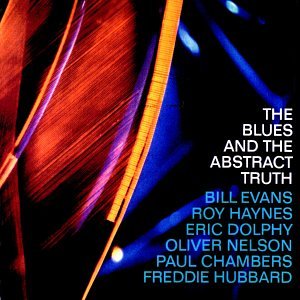
Oliver Nelson - The Blues and The Abstract Truth


Oliver Nelson had recorded several sessions for Prestige when the fledgling Impulse! label gave him the opportunity to make this septet date in 1961. The result was a rare marriage between an arranger-composer's conception and the ideal collection of musicians to execute it. The material is all based somehow on the blues, but Nelson's structural and harmonic extensions make it highly varied, suggesting ballads, hoedowns, and swing. The band is one of those groupings that seem only to have been possible around 1960, a roster so strong that the leader's name was actually listed fourth on the cover. Nelson shares the solo space with trumpeter Freddie Hubbard, alto saxophonist and flutist Eric Dolphy, and pianist Bill Evans, while bassist Paul Chambers and drummer Roy Haynes contribute support and baritone saxophonist George Barrow adds depth. In stark contrast to Dolphy's brilliant, convulsive explosions, Nelson's tenor solos are intriguingly minimalist, emphasizing a tight vibrato and unusual note choices. It's not quite Kind of Blue (nothing is), but Blues and the Abstract Truth is an essential recording, one that helped define the shape of jazz in the '60s. --Stuart Broomer

Download

Monday, May 16, 2011

Andrew Hill - Smokestack

Trimming away some of the overt Afro-Cuban rhythms that distinguished Black Fire, Andrew Hill turned in a dense, cerebral set of adventurous post-bop on his second Blue Note session, Smoke Stack. Comprised entirely of original Hill compositions, Smoke Stack is in the middle ground between hard bop and free jazz -- it isn't as loose and dissonant as free, but with its long, winding modal improvisations and hazy song structures, it's a lot less accessible than bop. It also isn't as successful as Black Fire, which worked similar territory with edgier results. Part of the problem is that Hill simply meanders throughout most of Smoke Stack, wandering off into quietly discordant sections that turn in on themselves. It's subdued music that requires concentration, but doesn't necessarily reward such effort. Even with its faults, Smoke Stack is far from an unworthy record -- Hill's insular, intellectual style may be occasionally frustrating, but his playing is frequently provocative and challenging, and his backing group of Richard Davis (bass), Eddie Khan (bass), and Roy Haynes (drums) offer sympathetic support. However, it's an album that promises more than it delivers.
Download

Sunday, May 15, 2011

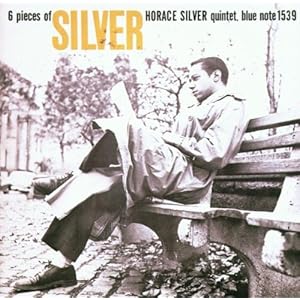
The Horace Silver Quintet - 6 Pieces of Silver

This 1956 recording by the Silver Quintet, featuring Hank Mobley on tenor sax and Donald Byrd on trumpet, is pure hard-bop heaven created by some of the masters of the genre. After spending the previous two years playing piano on some of Miles Davis' classic Prestige and Blue Note albums, and touring with the Art Blakey Quintet and the first edition of his Jazz Messengers, Silver was more than ready to step forward as a leader. His compositional talents had already been showcased with Blakey's groups, especially on 1954's "Horace Silver and the Jazz Messengers" (Blue Note), but "Six Pieces of Silver" was his his first chance to record with his own working quintet.All six Silver originals are gems, including classics like "Senor Blues" and "Cool Eyes," and the ensemble playing throughout is outstanding, especially given the group's youthfulness—Silver is the elder statesman at twenty-eight; drummer Louis Hayes the youngest at nineteen. Silver's writing at this early point in his career is more solidly in the bebop camp than his later funk and soul efforts, but the blues, gospel, and Caribbean influences that are his trademarks are evident. His own playing is marvelously subtle, showing a clear debt to Powell and Monk, especially on slower numbers like "Enchantment" and the trio efforts "Shirl" and "For Heaven's Sake." Mobley's big, warm tenor is a particularly good fit with Silver's piano, and the young Donald Byrd shines on upbeat numbers like "Virgo." The rhythm section of Doug Watkins on bass and Hayes on drums provides excellent support throughout the session. The CD reissue, part of Blue Note's Connoisseur series, also includes the popular vocal version of "Senor Blues" by Bill Henderson.

Download

Saturday, May 14, 2011

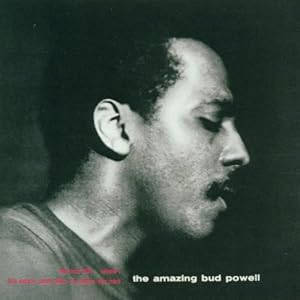
Bud Powell - The Amazing Bud Powell, Vol. 1

The CD reissues of the two albums titled The Amazing Bud Powell put the important recordings in chronological order (which they weren't in the LP versions) and add some alternate takes; all of the music has also been included in a definitive four-CD box set. Although the latter is the best way to acquire the important performances, this CD gives one a strong sampling of pianist Bud Powell at his best. Powell is heard in a classic session with trumpeter Fats Navarro and tenor saxophonist Sonny Rollins (which is highlighted by exciting versions of "Dance of the Infidels," "52nd Street Theme," and "Bouncing With Bud") and in a trio performing "Over the Rainbow" and three versions of his intense "Un Poco Loco."

Download

Sunday, May 8, 2011

Chick Corea - Now He Sings, Now He Sobs

This adventurous yet lyrical trio LP was Chick Corea's career breakthrough album, establishing him as a significant pianist and composer. Over three days in March 1968, Corea recorded with Miroslav Vitous and Haynes (they have since reunited many times over past 34 years) and produced a total of 13 great performances only five of which were used on the original albums. The material ranged from soon-to-be Corea classics like "Matrix" and "Windows" to extended improvised pieces like the title tune to creative interpretations of Monk's "Pannonica" and "My One And Only Love".

Download