 A list of Jazz Messengers alumni reads like a jazz Hall of Fame; Wynton Marsalis played With Art Blakey's group in 1980. In the Messengers' 35+ years of existence, this is arguably its finest incarnation and their most exciting album. Saxophonist Wayne Shorter, trumpeter Freddie Hubbard, trombonist Curtis Fuller, and Pianist Cedar Walton provide both distinctive compositions and emotional solos. Since the group has three horns, the two who aren't soloing are playing as an ensemble in the background giving the group a small 'big band' feel. Drummer Art never takes a self-indulgent solo; he is a solid, consistent presence. What sets this collection apart from others is the music. Each selection stands alone as a superior piece of writing that has been covered many times since this release. This recording was made in 1963 just before the individuals set out on their own respective roads. - Review By Leonard Gorsky

Saturday, February 26, 2011
Art Blakey - Mosaic
A list of Jazz Messengers alumni reads like a jazz Hall of Fame; Wynton Marsalis played With Art Blakey's group in 1980. In the Messengers' 35+ years of existence, this is arguably its finest incarnation and their most exciting album. Saxophonist Wayne Shorter, trumpeter Freddie Hubbard, trombonist Curtis Fuller, and Pianist Cedar Walton provide both distinctive compositions and emotional solos. Since the group has three horns, the two who aren't soloing are playing as an ensemble in the background giving the group a small 'big band' feel. Drummer Art never takes a self-indulgent solo; he is a solid, consistent presence. What sets this collection apart from others is the music. Each selection stands alone as a superior piece of writing that has been covered many times since this release. This recording was made in 1963 just before the individuals set out on their own respective roads. - Review By Leonard Gorsky

Friday, February 25, 2011
Hank Mobley - Roll Call
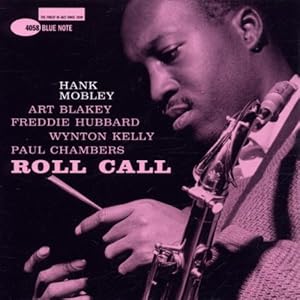 During his tenure with Miles Davis, Hank Mobley made four Blue Note albums with band mates Wynton Kelly and Paul Chambers, the most celebrated being Soul Station with Art Blakey on drums.
For Roll Call, recorded nine months later, Mobley assembled the same magnificent rhythm section and added Freddie Hubbard on trumpet. The result rivals its more well known predecessor in swing, soul and incredible solos. The gospely "A Baptist Beat," heard here in two takes, has become a favorite among club DJs and acid jazz fans.
Hank Mobley: Tenor Saxophone
Freddie Hubbard: Trumpet
Wynton Kelly: Piano
Paul Chambers: Bass
Art Blakey: Drums
Monday, February 21, 2011
Charles Mingus - East Coasting
 This sextet session dates from 1957, when the volcanic bassist and composer was first assembling his Jazz Workshop. Mingus had already put together the core of the band that would reach its summit two years later with Mingus Ah Um, including saxophonist Shafi Hadi, trombonist Jimmy Knepper, and drummer Dannie Richmond, who would be with Mingus's bands for the next two decades. The music has Mingus's distinct stamp, the rhythmic aggressiveness, sudden time (and mood) shifts, contrapuntal themes, and a palette of sounds that reaches back through bop to early jazz for the vocalizing, plunger-muted horns. His bass often sounds like articulate thunder as he presses his musicians toward a unique musical vision. Completing the group are two striking soloists: the seldom-heard trumpeter Clarence Shaw, best known for his work on Mingus's contemporaneous New Tijuana Moods, who combines thoughtful hesitancy and melodic daring; and pianist Bill Evans, whose distinctive musical presence and lyric imagination add to Mingus's often dense harmonies. The turbulent "West Coast Ghost" and the emotionally charged "Celia" stand out. --Stuart Broomer
Download
Sunday, February 13, 2011
Ornette Coleman - New York is Now!

Review
Recorded during the same session that resulted in the Love Call album (in late April and early May of 1968), New York Is Now is one of the true curiosity pieces in Ornette's catalog. With a rhythm section comprised of ex-Coltrane sidemen Jimmy Garrison and Elvin Jones as well as tenorist Dewey Redman, Ornette is, in some sense, at odds with himself here. This particular rhythm section is a lot more modally than harmonically propelled -- especially Jones, who sounds here like he doesn't know what to do with himself in the restrictive tempos -- and creates a complex set of issues for Coleman and Redman to contend with. That said, on "The Garden of Souls," which opens the album, Coleman makes the most of this sprightly, energetic rhythm team and moves through quotations of "Moon River," "Danny Boy," and even Paul Muriat's "Love Is Blue" during his solo, before shifting the harmonics around and anchoring them somewhere between E flat 7 and E major. On "Broadway Blues," Coleman uses Monk liberally in his melodic conception, and he and Redman have a go at turning a seven-note vamp into all sorts of knotty material for soloing -- and you can almost feel Jones smile as the tempo reaches triple time as the saxophonists race each other through it. And while this date is of only marginal interest on some level (for true hardcore Ornette-ophiles), it is pleasant and amusing if not amazing -- with the exception of "For a Commercial," which features Ornette's "fine" violin playing above the rest of the band in the mix (what a downer).
Tuesday, February 8, 2011
Art Blakey - Holiday for skins

Holiday for Skins is not totally unique in drummer Art Blakey's output, as the drummer was most famous for some of the greatest hard bop era records ever made with his Jazz Messengers. Though not a Jazz Messengers recording, this original double volume definitely has Blakey's strong personal, percussive stamp. The cover states this is "a message from Blakey and that message is mostly about rhythm and the vast expressive possibilities of the drum sets, congas, bongos, timbales and other percussion instruments.
The opening track, "Feast, starts with a single conga drum slowly sounding single notes with a vocal call (by which musician, though, who knows?). The single voice receives a response from a chorus of men (including Philly Joe Jones and the leader himself) before launching into an Afro/Cuban groove over which trumpeter Donald Byrd sails eloquent melodic statements. Ray Bryant 's piano solo follows and it is both burning and rock solid with the groove. About four-and-a-half minutes into "Feast Blakey starts one of his great solos that, though loud and explosive, is clearly in dialogue with the drum choir. The track comes full circle to the slowly beating solo conga drum and vocal call and response. However, what is the meaning of the chants? Are they traditional? Original? Are these Blakey's arrangements? Which conga player is soloing in what tune? The liner notes offer a nice glimpse into Blakey's personality, but leave a lot of basic, musically appropriate questions unanswered.
On "Mirage, a very cool tune by Blakey, we get to hear Philly Joe step into the spotlight on drum set. It begins with a bongo obbligato soon giving way to a Bryant vamp that tells you this tune is going to burn. Byrd plays the simple theme and then launches into a skillful solo that provides some of this project's most exciting moments. "Reflection, a Bryant original—which, coincidentally also makes an appearance on another great percussionist's recording, We Three (OJC, 1958), by Roy Haynes —appropriately closes the CD. Francis Lo Kee - AAJ
Download
Sunday, February 6, 2011
Clifford Brown/Max Roach Quintet - Brown and Roach Incorporated
 The first of the EmArcy recordings of the Clifford Brown/Max Roach Quintet, this album features trumpeter Brown, drummer Max Roach, tenor saxophonist Harold Land, pianist Richie Powell and bassist George Morrow in fine form. High points include "Stompin' at the Savoy," "I Get a Kick out of You" and Brown's ballad feature on "Ghost of a Chance." Near-classic music from a legendary group. [Originally released in 1954, Brown and Roach, Inc. was reissued on CD in 2004.]
Download
Saturday, February 5, 2011
Brian Eno collaborations - Part one
First part of what is gonna be a super massive work around Brian Eno's discography. Hope you will enjoy it.
Fripp & Eno - (No Pussyfooting)

Fripp & Eno - (No Pussyfooting)
Reviews by Ted Mills ALLMUSIC
At the same time Brian Eno was working on Here Come the Warm Jets, he was flexing his experimental muscle with this album of tape delay manipulation recorded with Robert Fripp. In a system later to be dubbed Frippertronics, Eno and Fripp set up two reel-to-reel tape decks that would allow audio elements to be added to a continuing tape loop, building up a dense layer of sound that slowly decayed as it turned around and around the deck's playback head. Fripp later soloed on top of this. No Pussyfooting represents the duo's initial experiments with this system, a side each. "Heavenly Music Corporation" demonstrates the beauty of the setup, with several guitar and synth elements building on top of each other, the music slowly evolving, and Fripp ending the piece with low dive-bombing feedback that swoops over the soundscape, bringing the piece to its conclusion. "Swastika Girls," on the other hand, shows how the system can be abused. With too many disconnected sounds sharing the space, some discordant, some melodic, the resulting work lacks form and structure. Eno and Fripp later refined the system on Evening Star and Eno's solo album Discreet Music. Fripp would take the system and base whole albums and live appearances around it (particularly Let the Power Fall). But it was here on No Pussyfooting where it all started.
Download
Fripp & Eno - Evening Star

Robert Fripp's second team up with Brian Eno was a less harsh, more varied affair, closer to Eno's then-developing idea of ambient music than what had come before in No Pussyfooting. The method used, once again, was the endless decaying tape loop system of Frippertronics but refined with pieces such as "Wind on Water" fading up into an already complex bed of layered synths and treated guitar over which Fripp plays long, languid solos. "Evening Star" is meditative and calm with gentle scales rocking to and fro while Fripp solos on top. "Wind on Wind" is Eno solo, an excerpt from the soon to be released Discreet Music album. The nearly 30-minute ending piece, "An Index of Metals," keeps Evening Star from being a purely background listen as the loops this time contain a series of guitar distortions layered to the nth degree, Frippertronics as pure dissonance. As a culmination of Fripp and Eno's experiments, Evening Star shows how far they could go.
Download
Fripp & Eno - The Equatorial Stars

At the same time Brian Eno was working on Here Come the Warm Jets, he was flexing his experimental muscle with this album of tape delay manipulation recorded with Robert Fripp. In a system later to be dubbed Frippertronics, Eno and Fripp set up two reel-to-reel tape decks that would allow audio elements to be added to a continuing tape loop, building up a dense layer of sound that slowly decayed as it turned around and around the deck's playback head. Fripp later soloed on top of this. No Pussyfooting represents the duo's initial experiments with this system, a side each. "Heavenly Music Corporation" demonstrates the beauty of the setup, with several guitar and synth elements building on top of each other, the music slowly evolving, and Fripp ending the piece with low dive-bombing feedback that swoops over the soundscape, bringing the piece to its conclusion. "Swastika Girls," on the other hand, shows how the system can be abused. With too many disconnected sounds sharing the space, some discordant, some melodic, the resulting work lacks form and structure. Eno and Fripp later refined the system on Evening Star and Eno's solo album Discreet Music. Fripp would take the system and base whole albums and live appearances around it (particularly Let the Power Fall). But it was here on No Pussyfooting where it all started.
Download
Fripp & Eno - Evening Star
Robert Fripp's second team up with Brian Eno was a less harsh, more varied affair, closer to Eno's then-developing idea of ambient music than what had come before in No Pussyfooting. The method used, once again, was the endless decaying tape loop system of Frippertronics but refined with pieces such as "Wind on Water" fading up into an already complex bed of layered synths and treated guitar over which Fripp plays long, languid solos. "Evening Star" is meditative and calm with gentle scales rocking to and fro while Fripp solos on top. "Wind on Wind" is Eno solo, an excerpt from the soon to be released Discreet Music album. The nearly 30-minute ending piece, "An Index of Metals," keeps Evening Star from being a purely background listen as the loops this time contain a series of guitar distortions layered to the nth degree, Frippertronics as pure dissonance. As a culmination of Fripp and Eno's experiments, Evening Star shows how far they could go.
Download
Fripp & Eno - The Equatorial Stars
Almost 30 years on since Evening Star, Robert Fripp and Brian Eno resume their collaboration, and remarkably, they seem to have picked up right where they left off. Remarkably, because Fripp's more recent soundscaping has had a different quality than either his collaborations with Eno or his proper "Frippertronics" albums like Let the Power Fall or the solo side of God Save the Queen/Under Heavy Manners. Surely they're not back to using the old Revox tape machine setup, but having Eno in the producer's chair (not to mention making his own musical contributions) seems to add a warmth that's been missing from albums like 1999. But much like Evening Star showed a progression from No Pussyfooting, The Equatorial Stars is another step forward while retaining all the same elements as their previous work together. On "Meissa," there's just a bit of glitch periodically applied to the background keyboards and guitar harmonics with Fripp soloing softly over the top. "Lyra" is even prettier, and you can really hear Fripp's guitar lines trailing off into the distance. His tone here is less saturated than on the earlier albums, but there's just as much sustain and his playing is beautiful and lyrical. "Ankaa" bears the strongest resemblance to the material on Evening Star, with that classic "Frippertronics" guitar tone. And just as their previous efforts were mostly, but not entirely, placid, The Equatorial Stars takes on a slightly more aggressive tone (if you can call it that) toward the end. "Lupus" adds the pulse of a heartbeat and a bit of sonic scuzz to the mix, and "Terebellum" takes on a slightly more ominous tone. Most surprising is "Altair," which almost gets funky with a bit of bass and some chicken scratch rhythm guitar work. While Fripp is nominally at the forefront on The Equatorial Stars, Eno's contributions and excellent production are just as important. There seems to be a genuine synergy when these two work together, and The Equatorial Stars is a worthy successor to their earlier brilliant albums together.
Download
Download
Thursday, February 3, 2011
Paul Motian - Monk in Motian
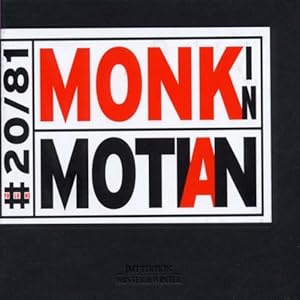
1. This is one of the best Frisell, Lovano, Motian records that they've done - and probably will do. Hard to believe they could swing so hard without a bass player in the line up. Lovano has NEVER sounded better, Frisell is his usual amazing self - and Motian lights up the skins like it's his last recording. Great recording all the way around...!
2. If you happen to catch the Paul Motian/Bill Frisell/Joe Lovano trio in concert, it's a near-certainty that you'll hear them play a Monk tune or two. Motian's trio and quintet had recorded a few Monk tunes on their previous albums (One Time Out, Misterioso) so an only-Monk album made a lot of sense. The basic trio of Motian, Frisell and Lovano is augmented by pianist Geri Allen and tenor saxophonist Dewey Redman on two tracks apiece. It's interesting to hear Allen interacting with the trio -- this is the only one of their albums to include any piano. Redman was a big influence on Lovano, so it's occasionally difficult to distinguish between them.
Unlike the On Broadway albums, the tunes here are taken relatively "straight" -- that is, except for the screaming electric guitar and the lack of a bass. It's fun to hear Monk tackled in this way. Aside from the ballad "Ugly Beauty", most of the tunes are fairly well-known Monk. I think the version of "Epistrophy" here isn't as good as the one on the trio's live album Sound of Love. You're also going to have to pick up Sound of Love for the trio's signature Monk tune, "Misterioso", which isn't included on Monk in Motian.
Overall, this album is recommended for fans of this trio's music. People who dislike noisy electric guitar might instead check out the three volumes of On Broadway and the Bill Evans tribute. However, the group has better recordings than this one.
(Random amazon users...)
Download
Subscribe to:
Posts (Atom)