Thursday, January 12, 2012

Dinosaur Jr. - You're Living All Over Me [Remastered]

A blitzkrieg fusion of hardcore punk, Sonic Youth-style noise freak-outs, heavy metal, and melodic hard rock in the vein of Neil Young, You're Living All Over Me was a turning point in American underground rock & roll. With its thin, unbalanced mix, the album sounds positively menacing and edgy -- Lou Barlow's bass barrels forward over Murph's clanking drums, with J Mascis' guitar twisting pummeling riffs and careening, occasionally atonal solos. It established guitar heroics as a part of indie rock, bringing the noise of Sonic Youth into more conventional song structures. Also, Mascis' laconic, self-absorbed whine was a distinct departure from the furious post-hardcore rants, or the mumbling Michael Stipe imitations, that dominated indie rock. While the songwriting is occasionally uneven, the best moments of You're Living All Over Me -- "Little Fury Things," "Raisans," "In a Jar," and Barlow's proto-Sebadoh "Poledo" -- retain their power, and it's possible to hear the record's influence throughout alternative rock.

Saturday, November 26, 2011

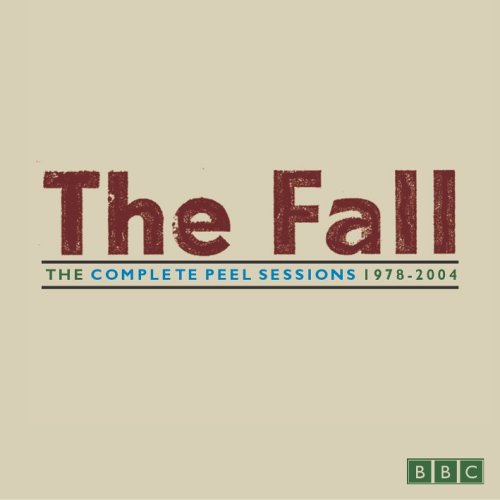
The Fall - The Complete Peel Sessions 1978-2004


This was posted long time ago on these very pages, I know. But links are broken so a re-up is absolutely deserved. I'm bit lazy lately, taken by a lot of stupid things in "real life". And of course by MW3. Anyway, I feel that this comprensive labour of love, that goes by the name of "The Complete Peel Sessions", will make your week-end a bit better, either if you're an hardcore Fall fan-boy/girl or random listener of the "best band in the world". There's a lot of music in it and is top class.


CD1
CD2
CD3 part 1
CD3 part 2
CD4
CD5
CD6 part 1
CD6 part 2

CD3 and CD6 are comprised of two parts. Download both and then extract with winrar.

Sunday, November 20, 2011

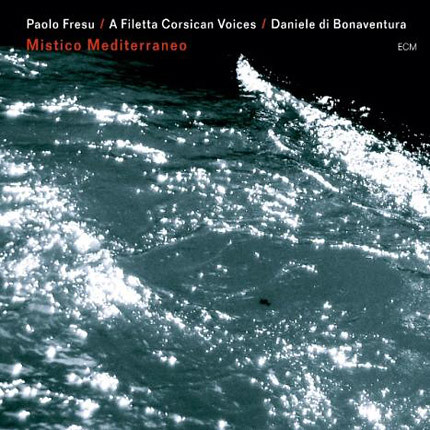
Paolo Fresu/A Filetta Corsican Voices/Daniele di Bonaventura - Mistico Mediterraneo

At a time when cross-pollination has become the new musical evolution, ECM Records remains at the vanguard. Whether blending music of Tunisian origins with European impressionistic concerns and hints of New World groove on oudist Anouar Brahem's The Astounding Eyes of Rita (2009), or marrying Persian percussion with Baroque instrumentation and Fourth World improvisation on keyboardist Jon Balke's Siwan (2009), few labels (if any) can boast such an impressive catalogue of constant innovation, where unfailing respect for tradition is matched by an equal disregard for the hard-coded conventions that seem, on the surface, inherent to its very definition.

Mistico Mediterraneo follows in the footsteps of Jan Garbarek and The Hillard Ensemble's (so far) trifecta, including Officium Novum (2010), where the saxophonist and classical vocal group turned eastward, further enriching an improvised language they've honed for nearly two decades. But as a collaboration between trumpeter Paolo Fresu, Corsican vocal group A Filetta, and bandoeonist Daniele di Bonaventura, the roots of Mistico Mediterraneo—and its ultimate destination—are inherently different. Rather than looking to an extant classical repertoire that crosses not just centuries, but millennia, Mistico Mediterraneo's song cycle is of distinctly contemporary origins, though the polyphonic tradition at its core dates back to the 9th century. The music may sometimes feel of timeless antiquity, but hints of modernity abound, as in French film composer Bruno Colais' "Le lac," where Fresu's electronically treated horn creates a near-ambient soundscape, over which di Bonaventura's bandoneon evokes a rippling, Steve Reich-ian pulse before A Filetta enters, with a plaintive chant revolving around a repetitive, descending three-chord pattern.

The bass-heavy A Filette—now led by Jean-Claude Acquaviva who, joining the group at 13, has since become its primary composer, contributing five pieces to this program—brings a different vocal tradition to the table than The Hilliards, one as steeped in the folk tradition of its locale as it is a classical one, blending sacred and secular texts sung in French, Corsican and Latin. Above it all Fresu, a trumpeter with his own deep roots in the jazz vernacular of Chet Baker and Miles Davis, intertwines with A Filette's seven voices, while engaging with di Bonaventura—surely the European answer to South American bandoneon master (and label-mate) Dino Saluzzi—on a profoundly interpretive level. This sublime combination of voice, horn and reeds is particularly effective on Jean-Michel Giannelli's "Dies Irae" which, despite its Latin text and cascading voices, somehow feels cousin to bassist Charlie Haden's often-covered "Silence."

Mistico Mediterraneo has something else that Garbarek/The Hilliards don't—a pulse. Tracks like "Gloria," with di Bonaventura's propulsive, ebb-and-flow rhythm supported by A Filette's similarly driven delivery, meet modernity with the timbral oscillations of Fresu's horn, while the all-vocal miniature, "La folie du Cardinal," would be relentless if it weren't only a couple minutes in duration. It all comes together in a recording that might be compared too quickly to Garbarek and The Hilliards' ongoing collaboration, but with music at least partly rooted in more temperate locales farther south, the superb Mistico Mediterraneo sings with a resonant collective voice all its own.

Track Listing: Rex tremendae; Liberata; Da tè à mè; Le lac; Dies irae; Gloria; Corale; La folie du Cardinal; U sipolcru; Scherzi veranili; Figliolu d'ella; Gradualis; Sanctus.

Personnel: Paolo Fresu: trumpet, flugelhorn; Daniele di Bonaventura: bandoneon. A Filetta: Jean-Claude Acquaviva: seconda; Paul Giansily: terza; Jean-Luc Geronimi: seconda; José Filippi: bassu; Jean Sicurani: bassu; Maxime Vuillamier: bassu; Ceccè Acquaviva: bassu.

Wednesday, November 16, 2011

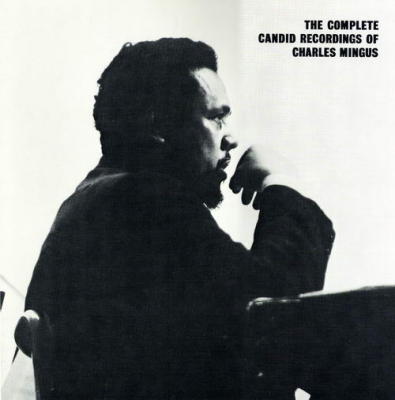
Charles Mingus - The Complete Candid Recordings


Bassist/leader Charles Mingus cut some of his most exciting and rewarding recordings for Candid in 1960 and this superb four-LP set (which unfortunately is a limited edition) contains all of the music except for a couple of alternate takes that showed up later on. Five selections feature the brilliant piano-less quartet of Eric Dolphy (on alto, bass clarinet, and flute), trumpeter Ted Curson, Mingus, and drummer Dannie Richmond, and these are highlighted by the bass clarinet-bass conversation on "What Love" and the interplay between the four musicians on the very memorable "Folk Forms No. 1." Other musicians are added to six other selections (including the 19-minute jam "MDM") and five other numbers feature trumpeter Roy Eldridge who is teamed with altoist Dolphy on three of the songs; those pieces originally appeared on the Newport Rebels' LP. This is a highly recommended set.

Download Disc 2
Download Disc 3

Monday, November 14, 2011

Yo-Yo Ma - J. S. Bach: The 6 Unaccompanied Cello Suites

Yo-Yo Ma recorded J.S. Bach's Six Unaccompanied Cello Suites on two occasions, first for release on LP in 1983, then again in 1997 on CD. It is the 1983 recording that is presented in Sony's Great Performances line, and the original digital recordings have been processed through direct stream digital to enhance the cello's sound with greater warmth and presence. Ma's readings of Bach are fairly liberal in rhythm and phrasing, and are decidedly more intuitive than analytical, with plenty of rubato and elongation of lines to suggest something like a free Romantic interpretation, far from any Baroque period re-creation. For some listeners who are fans of historically informed or authentic performances of Bach, this may be a stumbling block; but for most, Ma's expressive playing will seem satisfactory and quite enjoyable, if not exactly revelatory. There is a pensive quality to these performances that will strike some listeners as introspective and probing, while others may find them a bit self-indulgent and studied; either way, Ma falls short of ecstatic communion with the music and delivers a technically polished and intelligent performance that has grace and elegance, if not the deepest emotions or visionary heights. Competing with the magnificent recordings by Pablo Casals, Pierre Fournier, and Mstislav Rostropovich, this set can't be regarded as the last word in Bach's Cello Suites; however, it has held its own for many listeners over the years, and it deserves its place in Sony's valued reissue series.
 

Sunday, November 13, 2011

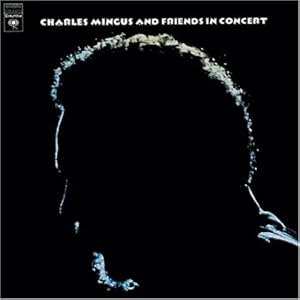
Charles Mingus and Friends in Concert

Most of Charles Mingus's larger-group recordings, particularly in the later part of his career, tended to be unruly and somewhat undisciplined. This two-CD reissue set (which adds five selections to the original two-LP program), which celebrated Mingus's return to jazz after six years of little activity. Such great jazzmen as baritonist Gerry Mulligan, tenor saxophonist Gene Ammons, altoist Lee Konitz, pianist Randy Weston, James Moody (heard on flute) and a variety of Mingus regulars had a chance to play with the great bassist; even fellow bassist Milt Hinton and Bill Cosby (taking a humorous scat vocal) join in. Most of the music is overly loose but the overcrowded "E's Flat, Ah's Flat Too" and particularly the "Little Royal Suite" are memorable. The "Little Royal Suite," in addition to Ammons, Konitz, Mulligan, Charles McPherson and Bobby Jones, features an 18-year old Jon Faddis (who was sitting in for an ailing Roy Eldridge) stealing the show.
Download Disc 2

Saturday, November 12, 2011

Charles Mingus - Mingus Ah Um

Charles Mingus' debut for Columbia, Mingus Ah Um is a stunning summation of the bassist's talents and probably the best reference point for beginners. While there's also a strong case for The Black Saint and the Sinner Lady as his best work overall, it lacks Ah Um's immediate accessibility and brilliantly sculpted individual tunes. Mingus' compositions and arrangements were always extremely focused, assimilating individual spontaneity into a firm consistency of mood, and that approach reaches an ultra-tight zenith on Mingus Ah Um. The band includes longtime Mingus stalwarts already well versed in his music, like saxophonists John Handy, Shafi Hadi, and Booker Ervin; trombonists Jimmy Knepper and Willie Dennis; pianist Horace Parlan; and drummer Dannie Richmond. Their razor-sharp performances tie together what may well be Mingus' greatest, most emotionally varied set of compositions. At least three became instant classics, starting with the irrepressible spiritual exuberance of signature tune "Better Get It in Your Soul," taken in a hard-charging 6/8 and punctuated by joyous gospel shouts. "Goodbye Pork Pie Hat" is a slow, graceful elegy for Lester Young, who died not long before the sessions. The sharply contrasting "Fables of Faubus" is a savage mockery of segregationist Arkansas governor Orval Faubus, portrayed musically as a bumbling vaudeville clown (the scathing lyrics, censored by skittish executives, can be heard on Charles Mingus Presents Charles Mingus). The underrated "Boogie Stop Shuffle" is bursting with aggressive swing, and elsewhere there are tributes to Mingus' three most revered influences: "Open Letter to Duke" is a suite of three tunes; "Bird Calls" is inspired by Charlie Parker; and "Jelly Roll" is an idiosyncratic yet affectionate nod to jazz's first great composer, Jelly Roll Morton. It simply isn't possible to single out one Mingus album as definitive, but Mingus Ah Um comes the closest.


Download

Thursday, November 10, 2011

The Kilimanjaro Darkjazz Ensemble - From The Stairwell

Upon listening to The Kilimanjaro Darkjazz Ensemble, one will find that their lengthy name is actually quite fitting to their sound. The hodgepodge septet of Europeans (the ‘Ensemble’) began its peculiar origin (‘Kilimanjaro’) when band founders Jason Köhnen (AKA breakcore musician Bong-Ra) and Gideon Kiers began merging their audio and visual skills to readapt old films such as Nosferatu and Metropolis. The ‘Darkjazz’ part of their title is just that, an arcane interpretation of the otherwise familiar jazz stylings we all know. While not as grim-sounding as their German contemporaries, Bohren & Der Club Of Gore, TKDE exhibits an interesting mix of the dismal and the serene while constructing an atmosphere that is easy to be immersed in.

From the Stairwell comes to us after two little-known, but otherwise well-received LPs; their 2006 eponymous debut and 2009’s Here Be Dragons. In their previous works, TKDE have had a troubled way with direction and structure which, while still interesting, lead listeners to blur the line between The Kilimanjaro Darkjazz Ensemble and their improvisational alter-ego band, The Mount Fuji Doomjazz Corporation. In finally setting the two bands apart, From the Stairwell takes us on a winding tour of more of everything that had initially made their music interesting. More trip-hop, more post-rock and more electronic bits. With that, it plays as their most distinguished and intentional effort yet.

From a sultry string section leading into sinister horn and bass tones, the opening track, All is One, carries itself into a delicate piano section reminiscent of a Miyazaki film. It’s the perfect opener for the album to preview what kind of new tricks TKDE has to offer on this release. As the song progresses into an irregular ride pattern behind queasy muted brass tones and a certain ominous drone, we get our first taste of Charlotte Cegarra’s eerie, hostile vocals that take us to a tense and smoky jazz club. This is where TKDE’s imagery begins.

Only fifteen minutes later are we taken into the unlikely gem Cocaine, which sees your ears stumbling into gritty, busy factory that seem to be operated by… no one? Ghosts? It might not fit into the jazz-influenced mold that the rest of the songs on the album do but it’s the most evident result of TKDE’s experimentation within a sound they are already comfortable with. This barren track is full of industrial tones, creeping along with machinery noises, reversed chimes and what appears to be samples of steam-powered mechanisms that just grow colder and more intense until an ambient light is reached near the end.

On later tracks, such as White Eyes, the hopeful Celladoor and Les Étoiles Mutantes (The Mutant Stars), the band shows off the recent addition of Tortoise-esque post-rock elements to their repertoire as well as a ton of electronic bleeps and fizzes, no doubt on account of Bong-Ra’s background. The latter track, while not the closer, brings the LP back to the atmosphere it started on in All is One, only on a higher plane, a sign that we’ve now come up From the Stairwell. The bending guitar tones and electric keys behind Cegarra’s echoing voice bring to mind some of Stars of the Lid’s earlier material and set the music in some sort of luxurious floating space beatnik club leaving the earth’s surroundings playing only the most sophisticated of future-jazz.

It’s a shame that TKDE thought it was necessary to include the 12-minute, drawn out drone-fest that is the actual closer, Past Midnight. Without that track, in the light of everything mentioned above, I would have forgotten about the few things I thought weak from this release: Sporadic encounters with long, dragging sections somewhere between filler and build-up with often no details of interest as well as very busy segments where too many tones are blending and it’s difficult to comprehend what is going on in an otherwise quite articulate release.

As much as The Kilimanjaro Darkjazz Ensemble’s brand of jazz isn’t mainstream material by any stretch, with From The Stairwell, they’ve made themselves accessible for the first time. By mastering what they already had to offer and then adding even more flesh to their bones, they’ve concocted a release bound to entice more than simply their obscure cult fan base. Finally established as a band with direction and intent, The Kilimanjaro Darkjazz Ensemble’s 3rd LP is one to be taken in by an audience as diverse as the influences present in it.